
The Hidden Psychology of Framing
May 25, 2026The Cinematic Power of Symmetry and Center Framing
Sometimes the difference between an ordinary image and a cinematic image is not the camera, lens, or lighting. Sometimes it is simply where we place the subject inside the frame.
While watching Sinners, directed by Ryan Coogler with cinematography by Autumn Durald Arkapaw, one thing immediately stood out to me visually. Almost every frame in the film feels incredibly intentional compositionally.
The movie constantly uses centered compositions, symmetry, negative space, and environmental geometry to create emotional weight. And what fascinated me most is that these framing choices were not simply aesthetic decisions. They were psychological decisions.
That is an important distinction.
One of the biggest misconceptions in cinematography is thinking composition is simply a collection of rules. Rule of thirds. Golden ratio. Leading lines. Negative space. Symmetry.
But what if composition is not really about rules at all?
What if composition is actually an intentional way of communicating emotion?
Framing changes emotional perception
If we compare these two shots of the Saint Louis Arch, both images are technically "correct." But emotionally, they feel completely different.

Off-center composition feels observational and environmental

Centered framing creates monumentality and visual dominance
The off-center frame feels more observational and human. The arch becomes part of a larger environment instead of dominating the image.
But the centered composition literally makes the arch the center of the story. It feels monumental, iconic, stable, resolved, intentional, almost timeless.
Neither framing is objectively better. They simply communicate different emotions.
Why symmetry feels psychologically powerful
Human beings naturally search for balance and order visually. Symmetry creates a feeling of structure, control, stability, precision, and intentionality.
That is why centered framing often feels cinematic.
Not because it is automatically more artistic, but because the image feels deliberate.
In Sinners, symmetry is constantly used to amplify emotional tension.
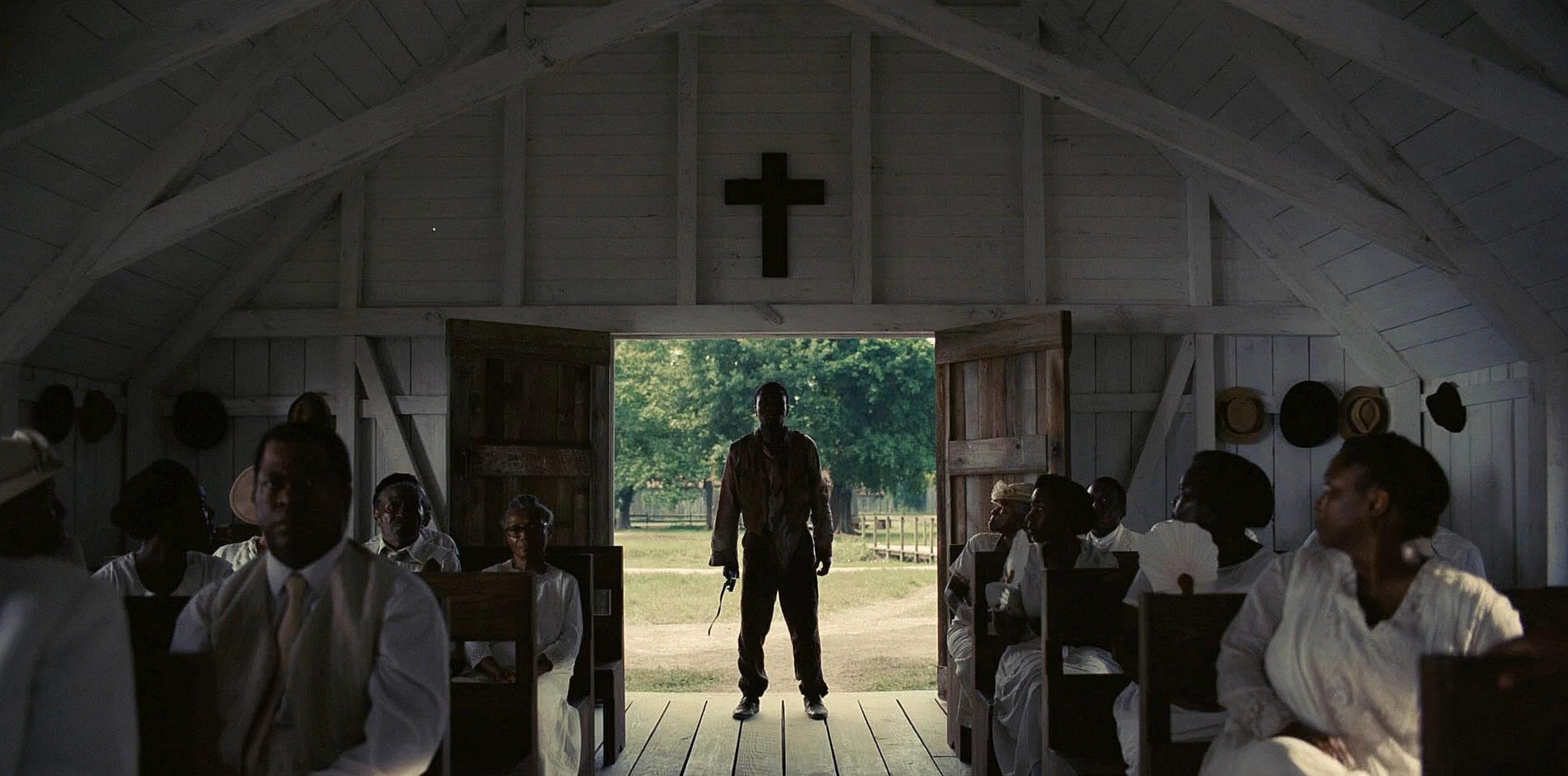
This church frame is a perfect example.
The room itself becomes psychologically dominant over the character. The symmetry creates order and structure, but the dark lighting, centered doorway, and cross looming above the scene transform that order into something emotionally oppressive.
The composition creates a feeling of judgment, spiritual tension, inevitability, and emotional exposure.
And what makes the shot so powerful is that the framing is not creating the emotion alone. It is amplifying what the lighting, production design, music, and performance are already communicating.
The same framing can create completely different emotions
What makes centered framing fascinating is that the exact same compositional approach can create entirely different emotional reactions depending on the context.
This centered shot from Sinners feels completely different from the church sequence.

The converging road lines psychologically pull us forward. The centered road creates movement, direction, journey, destiny, and inevitability.
Instead of oppression, the symmetry now creates momentum.
This is why composition cannot simply be reduced to formulas.
The psychology of framing depends entirely on context.
Negative space creates emotional scale
Another powerful compositional tool used throughout Sinners is negative space.
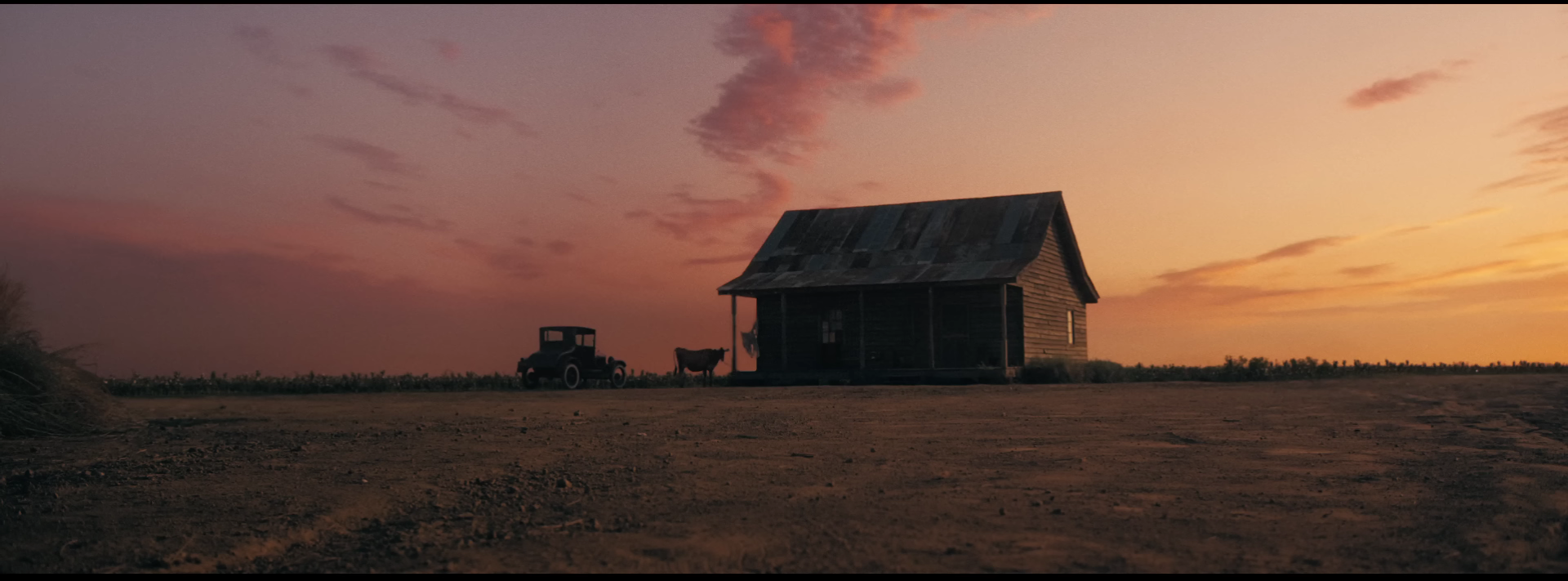
The massive amount of empty foreground surrounding the farmhouse creates emotional vulnerability.
The house feels isolated. Small. Exposed.
The empty space itself becomes part of the storytelling.
Negative space often creates emotional scale because it visually emphasizes how small a subject feels inside the environment.
And this is something I think corporate filmmakers can use far more intentionally.
Center framing works in corporate filmmaking too
Hollywood cinematography often feels emotionally intentional because every visual choice supports the story.
But those same ideas absolutely apply to interviews, documentaries, brand films, and corporate filmmaking.
In this interview frame, the subject is perfectly centered within the environment.

The symmetry of the furniture and architecture creates a feeling of calmness, balance, professionalism, confidence, and stability.
The frame feels organized.
That psychological feeling matters, especially in corporate storytelling.
We are not simply recording a person speaking. We are visually communicating trust, confidence, structure, and control.
That emotional response is partly being created through composition.
Symmetry does not require centered subjects
One of the most interesting things about symmetry is that the subject itself does not always need to sit directly in the center.
Sometimes the symmetry exists in the environment itself.

In this frame, the room is split visually into two balanced sides. The table, architecture, spacing, and positioning create order and structure.
The composition creates a sense of teamwork, organization, equality, collaboration, and stability.
Even though no single person occupies the exact center of the frame, the symmetry itself still psychologically shapes how the image feels.
This is very similar to how the church sequence in Sinners uses balance and symmetrical placement on both sides of the aisle.
The emotional outcome is different, but the underlying compositional psychology is very similar.
Centered framing creates emotional fixation
Centered framing naturally forces the audience to focus on the subject.
That is why it often feels more emotionally direct.
This frame from Sinners is a perfect example.

The centered composition creates fixation.
The chaotic environment almost disappears because our eyes are immediately drawn toward the center of the frame.
The lighting also supports this by making the subject brighter than the background.
The result feels seductive, intimate, emotionally magnetic, and psychologically focused.
Center framing can create tension too
Years ago, I experimented with center framing during a high-pressure corporate sales shoot.

The environment itself was stressful. Employees were trying to hit sales goals while a countdown clock continued ticking.
By placing the subject directly center frame looking straight toward camera, the composition immediately became more confrontational and emotionally direct.
The audience almost experiences the tension themselves.
Centered framing often creates intensity because the subject visually confronts the viewer instead of feeling observational.
Leading lines amplify movement and direction
Centered framing becomes even more powerful when combined with leading lines.
This campus shot is a good example from my own work.

The mountain becomes the visual anchor of the composition, but the walkway lines psychologically pull us forward.
The frame creates a sense of direction, progress, movement, and future.
The students walking down the center reinforce that emotional feeling.
Again, the framing itself is not creating the emotion alone. It is amplifying the emotional ideas already present within the scene.
Symmetry works because it feels intentional
One of the biggest reasons centered framing feels cinematic is because it rarely feels accidental.
Balanced compositions naturally communicate deliberateness.
And I think that is why symmetry can feel so visually satisfying on screen.
Even subtle visual balance immediately changes how professional and intentional an image feels.
This frame from Sinners is another perfect example.
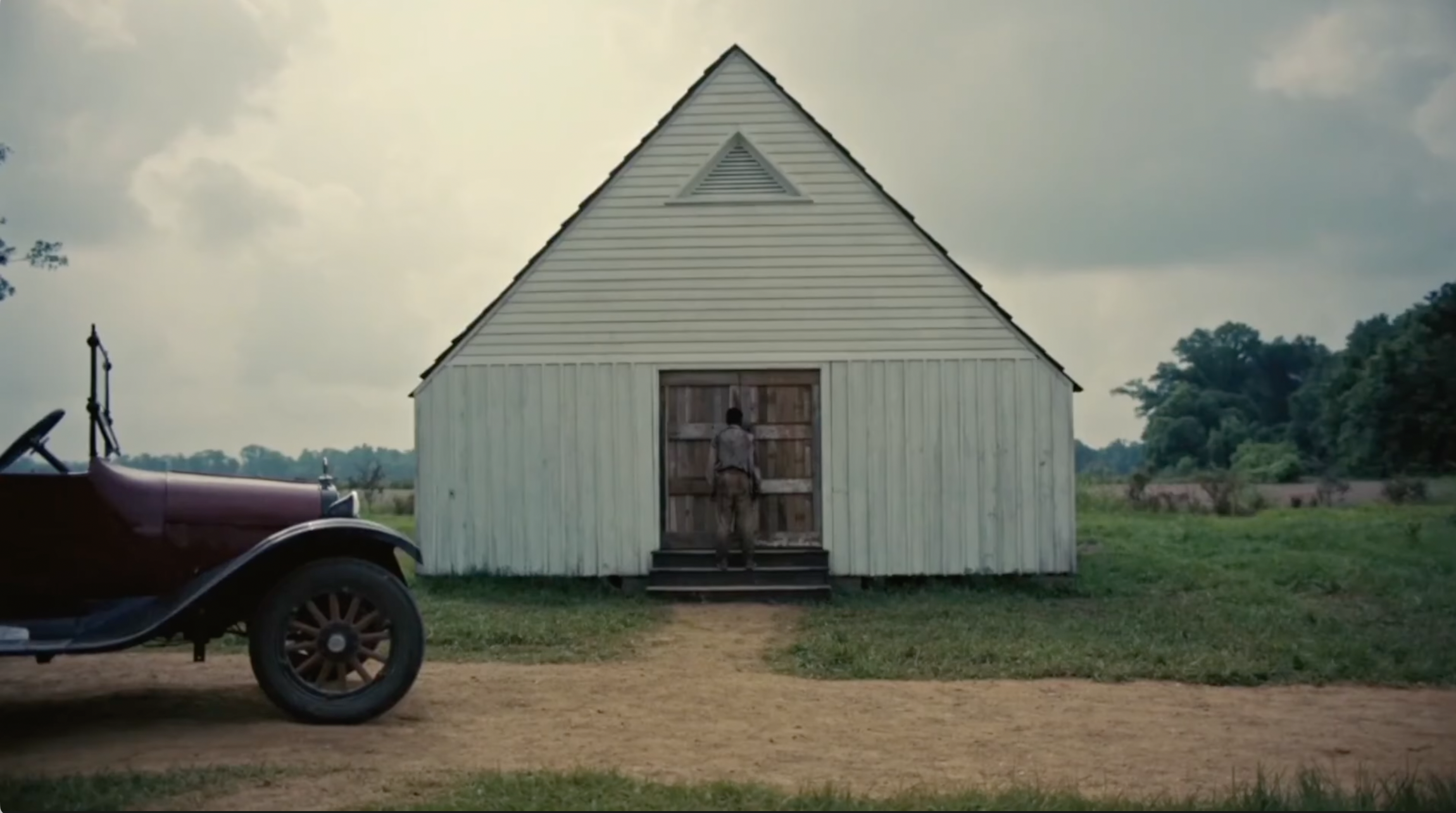
The camera movement, centered composition, and symmetrical placement of the church all work together to create emotional inevitability.
The audience immediately feels that the location itself matters.
Final thoughts
At the end of the day, composition is not about blindly following formulas.
It is about understanding what the frame is emotionally communicating to the audience.
Symmetry, center framing, negative space, asymmetry, and leading lines are not rules. They are emotional storytelling tools.
And films like Sinners are great reminders that composition itself can become part of the storytelling.
The frame is not simply recording the scene. The frame is helping the audience feel the scene.
If you want to dive deeper into cinematography, exposure, framing, lighting, and understanding how to create more intentional images, be sure to check out my online course, Essential Camera Settings.
by Chris Tinard © cNOMADIC 2026
Learn more about cNOMADIC’s cinematography philosophy and training at cNOMADIC.com