

Why your lighting feels fake
May 12, 2026Why Your Lighting Feels Fake
Natural-looking cinematography is not about using less light. It is about making every source feel like it belongs in the world of the image.
One of the most common mistakes in cinematography is assuming that good lighting simply means making the subject look good. Clean exposure, soft light, separation from the background, and a polished image are all important, but none of those things automatically make lighting feel natural.
The real question is not just, “Is this scene bright enough?” The better question is, “Does the light feel like it belongs here?”
That difference may seem small, but it changes the entire way you approach lighting. Instead of walking into a room and immediately thinking about where to place a key light, you start by studying what the environment is already giving you. Where is the window light coming from? What practicals are visible? What parts of the room naturally fall into shadow? What color temperature already exists? What should be enhanced, and what should be controlled?
This is especially important in corporate filmmaking, documentary work, interviews, and real-location cinematography, where you usually do not have complete control over the space. Most of my work happens in real offices, conference rooms, restaurants, homes, and practical environments that were never designed for cinematography. You often have limited time, limited access to equipment, existing overhead fixtures, white walls, bright windows, and clients waiting for you to move quickly.
In those situations, lighting becomes less about building a perfect setup from scratch and more about problem solving. You are trying to create the best possible image inside a real environment with real limitations.
Over time, this became one of the biggest mindset shifts in my work:
The most natural-looking images usually come from working with the environment instead of fighting against it.
Why lighting starts to feel fake
Lighting often feels artificial when it becomes disconnected from the world of the scene. Sometimes the subject is brighter than the room in a way that makes no sense. Sometimes the light direction does not match any visible source. Sometimes everything is evenly exposed, with no falloff, no shadow, and no sense of depth. And sometimes the lighting is technically clean, but emotionally it feels detached from the space.
This is why some soap operas, daytime television shows, prescription drug commercials, banking ads, sitcoms, and corporate videos can have that overly polished look. The lighting is not necessarily bad. In many cases, it is doing exactly what it was designed to do: create consistency, visibility, beauty, and speed. But when everything is filled in, every face is evenly exposed, every shadow is softened, and every corner of the room is visible, the image can start to feel less like a real environment and more like a constructed one.
That is the important distinction. Fake-looking lighting is not always caused by poor technique. Sometimes it is caused by lighting priorities. If the priority is perfect visibility, the result will often feel different than if the priority is believability.
Real light is rarely perfect. It has direction. It has falloff. It creates shadows. It leaves parts of the frame alone. It interacts with walls, windows, practicals, surfaces, and architecture. When we remove all of that complexity by flooding a room with even light, we often remove the very things that make the image feel grounded.
Exposure and believability are not the same thing
This is one of the most important lessons I have learned. A shot can be properly exposed and still feel wrong.
In this early interview setup, the subject is clearly visible, but the lighting does not feel connected to the environment.

The subject is too bright compared to the background. The light is too frontal. The transition is harsh. There is very little falloff across the face, and the background does not support the intensity of the key light. The result is an image where the subject feels placed on top of the environment rather than existing within it.
This is the difference between exposing a person and lighting a scene.
When I was earlier in my career, I was often focused on making sure the subject was bright enough, separated enough, and clean enough. But I was not always asking whether the lighting made sense within the frame. That is where the image can start to feel artificial.
Good cinematography is not only about the subject. It is about the relationship between the subject, the background, the available light, the contrast, and the emotional tone of the space.
Natural light still has to be shaped
One of the more interesting lessons is that lighting can look fake even when you are using no artificial lighting at all.

This frame is lit entirely by natural daylight coming through the windows. But the subject still feels overlit because the light is uncontrolled. The brightness on his face does not blend naturally with the rest of the environment, and the image loses the kind of selective contrast that would make it feel more believable.
This is where a lot of people misunderstand natural light. Natural light does not automatically create natural-looking cinematography. A window can be just as harsh, uncontrolled, or unflattering as any artificial source. Sometimes daylight needs to be diffused. Sometimes it needs to be cut. Sometimes it needs negative fill. Sometimes the best solution is not adding a light, but reducing or shaping the light that is already there.
In this case, a simple diffusion frame off-camera could have lowered the intensity and softened the quality of the daylight hitting the subject. That would have helped his exposure feel more connected to the room.
The lesson is simple: natural light is still a source, and every source has to be controlled.
Light direction has to make sense
Another reason lighting feels fake is inconsistent direction. The audience may not analyze it technically, but they feel when the light behaves strangely.

In this frame, the woman is lit much more strongly than the man, and there is harsh spill bleeding across his shirt. The problem is not simply that one person is brighter than the other. The problem is that the light does not behave with enough intention. It feels like the source is hitting parts of the frame accidentally instead of being shaped deliberately.
This is where grip work becomes just as important as the light itself. A flag, barn doors, negative fill, a better modifier, or even a slight repositioning of the source can completely change whether the lighting feels intentional or uncontrolled.
One of the most important things to ask on set is not only where the light is going, but where it should not go.
The wide shot problem
Wide shots can expose lighting weaknesses very quickly. In a close-up, you can often create a beautiful image with one well-placed source, a little negative fill, and a controlled background. But in a wide shot, suddenly the entire room has to hold together.
That is difficult, especially when you are in a real location with limited gear and limited time.

Wide shot flooded with light

Close-up with directional contrast
In the wide shot, the room is bright, clean, and readable, but the light feels flat. There is not much direction or contrast because the priority became getting enough level across the space. This is a common real-world compromise. When you do not have enough equipment to shape a large area, the temptation is to simply flood the room.
The close-up works better because the light can be moved into a more intentional position. It comes from the side, creates shape on the face, and allows the background to fall away. The image immediately feels more cinematic because the light has direction and contrast.
This comparison is useful because it shows that lighting is not only about gear, but coverage strategy. Sometimes the question is not, “How do I light this room?” The better question is, “What shots actually need to be wide, and where can I preserve the best lighting for the moments that matter most?”
That is a real production decision. Every setup is a negotiation between time, coverage, movement, equipment, and image quality.
Three-point lighting does not mean three lights
Early on, I was locked into a very literal idea of lighting. Key light. Fill light. Back light. Traditional three-point lighting.
That framework can be helpful when you are learning, but it can also become limiting if you treat it like a formula. During a workshop I attended years ago, a DP explained something that changed the way I thought about lighting:
Three-point lighting does not mean three lights.
That sounds simple, but it is a major shift. The window is a light. The lamp in the corner is a light. The overhead fixtures are lights. The white wall bouncing daylight back into the subject is a light. The table reflecting brightness upward is a light. The computer screen, the hallway spill, the open doorway, the city outside, all of it is part of the lighting setup.
Your job as a cinematographer is not just to add a key light. Your job is to evaluate every source that is influencing the frame and decide what to keep, what to enhance, what to reduce, and what to remove.
That is when lighting becomes less about placing fixtures and more about controlling relationships.
Augmenting the environment
When artificial lighting works well, it often disappears into the image. It does not feel like a separate source imposed onto the scene. It feels like the environment naturally created that light.

In this frame, the window provides the main motivation. The artificial light is not fighting that direction. It is simply helping control the level on the subject so the exposure lands where it needs to be. The background still feels natural. The room still has falloff. The image has contrast, but nothing feels disconnected.
This is often what I am trying to do in corporate work. I am not trying to make the office look like a soundstage. I am trying to take what the room already offers and make it photograph better.
That might mean adding a key light from the same direction as the window. It might mean lowering ambient spill. It might mean using negative fill to restore contrast. It might mean letting the background stay darker than the subject. The point is not to erase the location. The point is to refine it.
Practical lights can give your image permission
Practicals are incredibly useful because they give the audience a reason to believe the light.
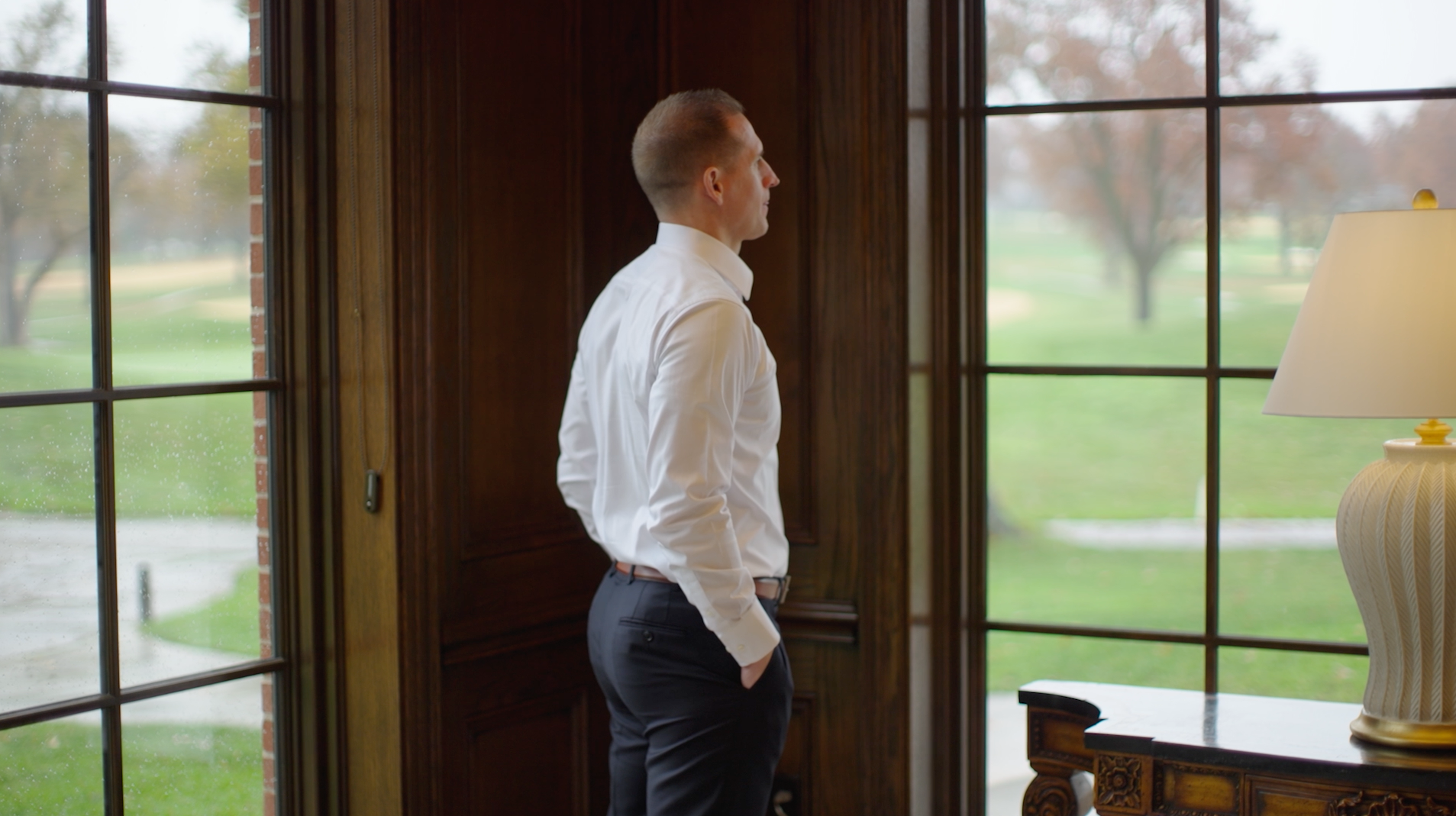
Daylight establishes the environment

Warm key motivated by the practical lamp
In this example, the daylight coming through the windows creates the overall environment, but the subject still needs additional exposure. Instead of adding a light that feels unrelated, the warmth from the lamp becomes the motivation. By matching the color temperature of the added light to the practical, the artificial source feels like it belongs in the room.
This does not mean the practical lamp is actually doing all the work. It usually is not. But it gives the viewer a visual explanation for why that warmth exists.
That is an important part of believable lighting. Sometimes the motivation does not have to be literal. It just has to feel emotionally and visually logical.
Natural does not always mean soft
Another mistake is assuming that natural lighting always has to be soft, pretty, and low contrast. That is not true. Natural-looking lighting depends entirely on the environment.

This restaurant was dark, contrasty, and filled with harsh overhead spotlights. There were deep shadows and cool blue accents along the wall. In that environment, soft, bright, low-contrast interview lighting would have felt out of place.
So the lighting needed to match the character of the room. A harder key source created stronger contrast on the subject. A blue edge light connected him to the existing blue accent lighting in the background. The image feels more believable because the subject is lit in the same visual language as the environment.
This is the deeper lesson: believable lighting is not one specific look. It is consistency.
Sometimes believable lighting is soft window light. Sometimes it is hard sunlight. Sometimes it is a warm lamp. Sometimes it is a harsh restaurant spotlight. The question is not whether the light is soft or hard. The question is whether the light makes sense for the world you are showing.
Removing light is lighting
One of the most important lessons I learned much later is that removing light can be just as important as adding it.
Early in my career, I wanted to expose everything. I wanted to see every corner of the frame, lift every shadow, and make sure nothing was too dark. But the more I worked, the more I realized that shadows are not a problem to solve. Shadows are part of the image.
Contrast creates depth. Falloff creates realism. Selective darkness creates mood. And often, the thing making a scene feel fake is not the absence of light, but the absence of darkness.
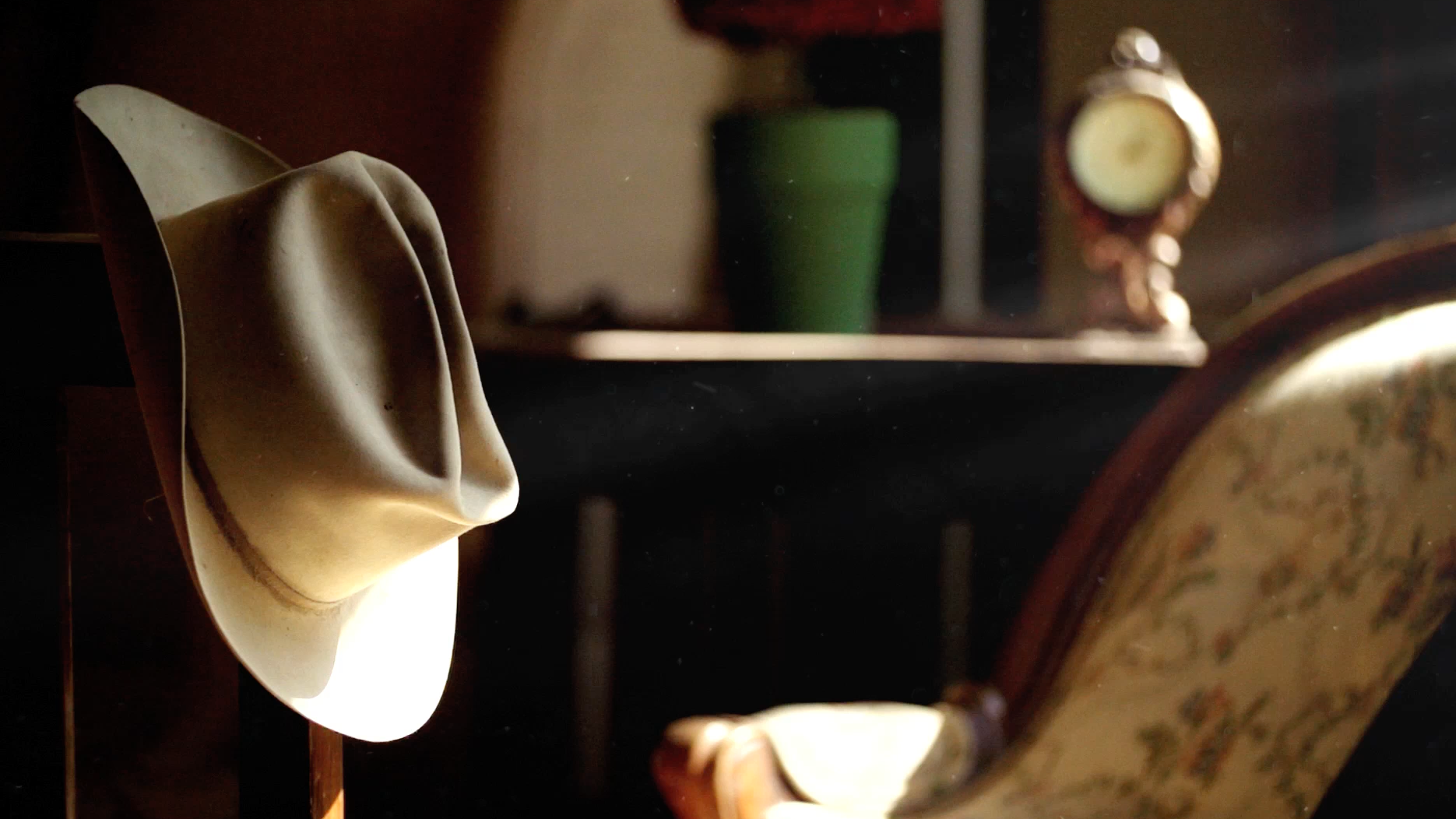
This frame works because parts of it are allowed to disappear. The light feels selective. The shadows give the image texture and atmosphere. The darkness helps the brighter areas feel intentional.
If this entire frame were filled in evenly, it would lose most of its mood.
This is why negative fill, flags, solids, and simply turning lights off can be so powerful. Sometimes the best lighting decision is deciding what not to light.
A practical way to approach natural-looking lighting
When you walk into a real location, it helps to slow down and evaluate the room before you start placing lights. I like to think through a few questions:
- What is the strongest existing source? Is it a window, a lamp, an overhead fixture, or something outside the frame?
- What direction does the room already want to be lit from? Fighting the natural direction usually makes the image feel forced.
- What should stay dark? Not everything in the frame needs attention.
- Where is unwanted spill coming from? Sometimes the image needs less light, not more.
- What source can motivate the artificial light? A window, lamp, hallway, or practical can help the lighting feel believable.
- Does the subject feel connected to the background? The subject should not feel pasted on top of the environment.
These questions are often more useful than asking what light to use. Gear matters, but the thought process matters more.
Final thoughts
Lighting that feels natural is not necessarily lighting that uses only natural light. And it is not always soft, dark, bright, warm, or minimal.
Natural-looking lighting is lighting that feels believable within the environment.
Sometimes that means adding light. Sometimes it means diffusing window light. Sometimes it means matching a practical. Sometimes it means using a harder source because the room itself is harsh and contrasty. And sometimes it means removing light so the shadows can do their job.
At the end of the day, cinematography is not just about making an image look polished. It is about making the audience believe the image belongs to the world in front of them.
And that is still something I am learning on every project. I still make mistakes. I still look back after shoots and see things I could have done differently. But that constant evaluation is part of becoming a better cinematographer.
If you want to dive deeper into cinematography, exposure, dynamic range, and camera control, be sure to check out my online course, Essential Camera Settings.
by Chris Tinard © cNOMADIC 2026
Learn more about cNOMADIC’s online cinematography philosophy and training at cNOMADIC.com