
Frame the Uncontrollable: A Better Way to Compose Your Shots
Aug 10, 2026Frame the Uncontrollable: A Better Way to Compose Your Shots
Strong composition starts before you place the subject. First establish the frame around the location elements that serve the story—then arrange the people, action, props, and light you can control.
When filmmakers talk about framing and composition, we often use the words as if they mean the same thing. They are closely related, but separating them gives us a much clearer way to work on location.
Framing establishes the boundaries of the image and protects the visual elements that matter most. Composition arranges everything else inside those boundaries.
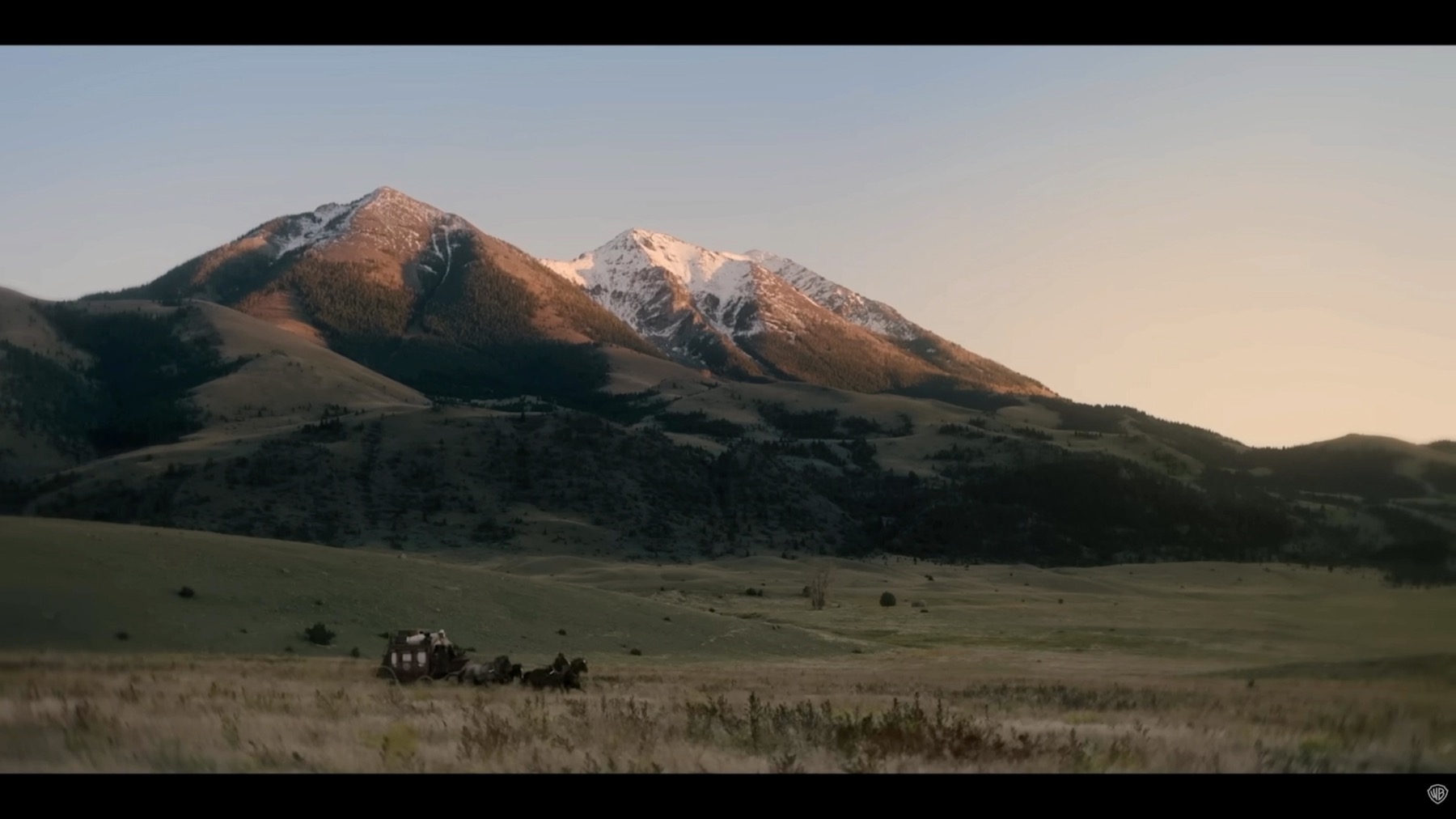
That distinction became especially clear to me while watching The Unholy Trinity, directed by Richard Gray and photographed by director of photography Thomas Scott Stanton. Again and again, the landscape or architecture appears to establish the frame. The actors, action, props, and motivated light then complete the composition within it.
I cannot know the filmmakers’ exact behind-the-scenes process from the finished movie alone. But the recurring visual pattern suggests a useful method that applies far beyond Western landscapes:
Frame the uncontrollable. Compose the controllable.
Framing and composition solve different problems
Framing answers the first group of questions:
- What belongs inside the image?
- What should be excluded?
- Which fixed features of the location are important to the story?
- Where should the camera be placed to preserve those features?
Composition begins after that decision. It asks where the subject should stand, how close they should be to the camera, what path they should take, where a prop belongs, and how the light should guide attention through the established frame.
Imagine that a mountain range is essential to the story. You begin by finding the camera position and lens that frame the mountain correctly. Only then do you decide where the actor enters, how large they appear, and how their movement reveals or obscures the landscape.
This reverses a common location habit. Instead of placing the subject first and moving the camera around them, you begin with what the scene needs to communicate.
Start with what you cannot move
Every location contains uncontrollable—or at least difficult-to-control—elements. These may include:
- landscape and horizon lines
- architecture, windows, and doorways
- staircases, columns, and built-in practical lights
- the direction of the sun
- large pieces of permanent production design
- background activity that supports the story
The goal is not to include everything attractive in the room. It is to identify the fixed elements that help the audience understand the place, character, or action. Once those priorities are clear, position the camera so the frame protects them.
That commitment makes the next decisions easier. Actors can be blocked. Props can be moved. A chair can be repositioned. Light can be shaped. Those controllable elements should strengthen the frame rather than force the camera into a weaker position.
Example: build a mountain-bike sequence around the reveal
I used this approach on a mountain-biking project in Sedona, Arizona. The red-rock landscape was essential to the lifestyle the film needed to communicate, so the mountain became my uncontrollable visual priority.
I first imagined the frame I wanted the audience to reach: the riders against the mountain. Then I worked backward. I kept the camera low, used foreground trees to partially hide the landscape, and planned for the riders to pass close to the lens before the mountain was fully revealed.
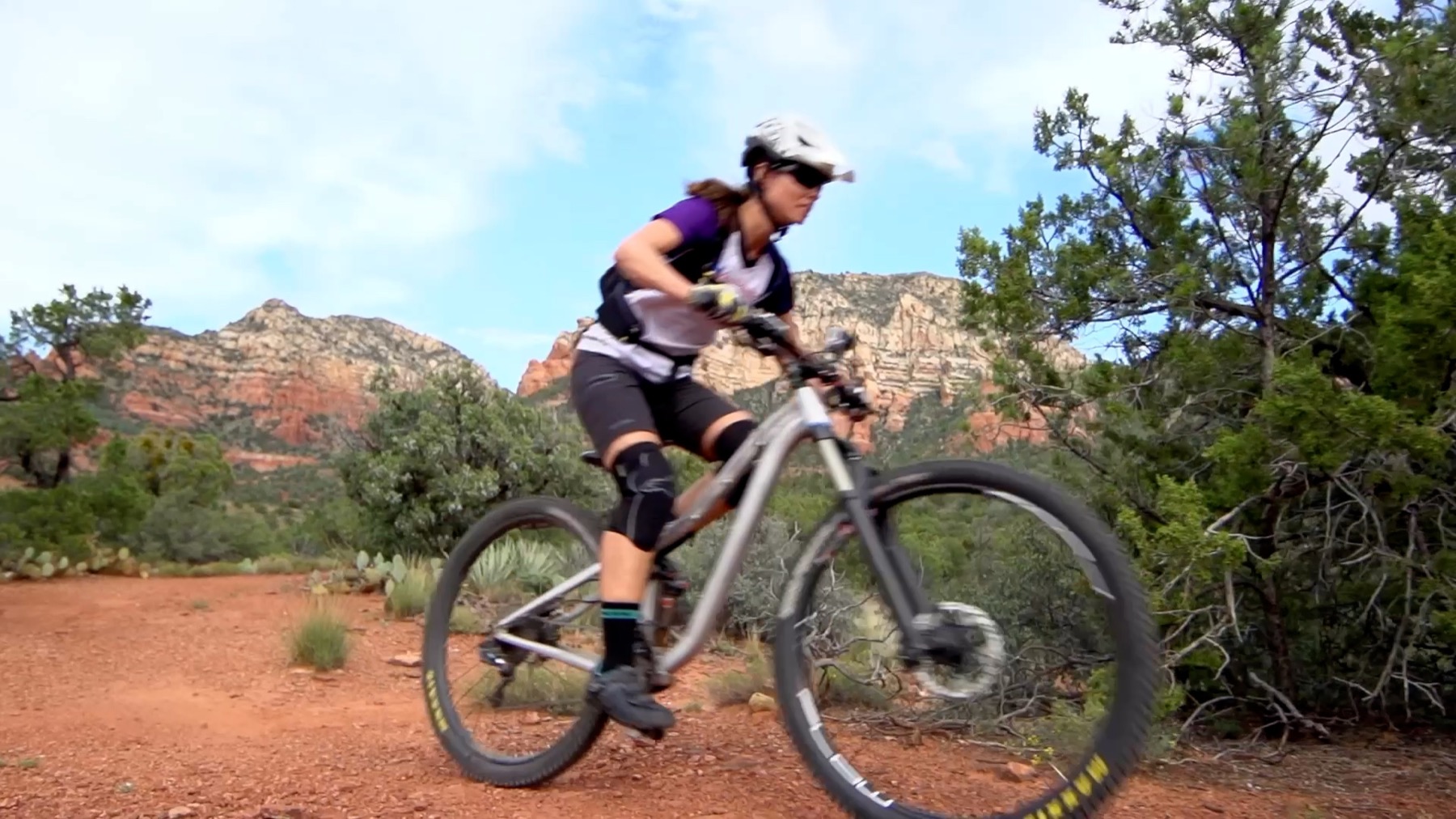
The movement was not separate from the composition. Bringing the bikes close to the camera made them feel larger and more important, while their exit uncovered the landscape that had determined the frame from the beginning.
This is a useful reminder that composition is not only the placement of static objects. Blocking, camera movement, timing, and reveal all operate within the frame.
Architecture can establish the frame indoors
The same method applies inside a practical location.
In one sequence from The Unholy Trinity, a character arrives at an outpost and sits at a table. The production reportedly used fully built practical structures rather than movable soundstage walls, and the lighting is designed to feel motivated by windows and open doors.
That makes the architecture especially important. A table scene is not framed as two actors floating in a dark room. Windows, doorways, the bar, and story-relevant objects provide orientation and believable sources for the light.
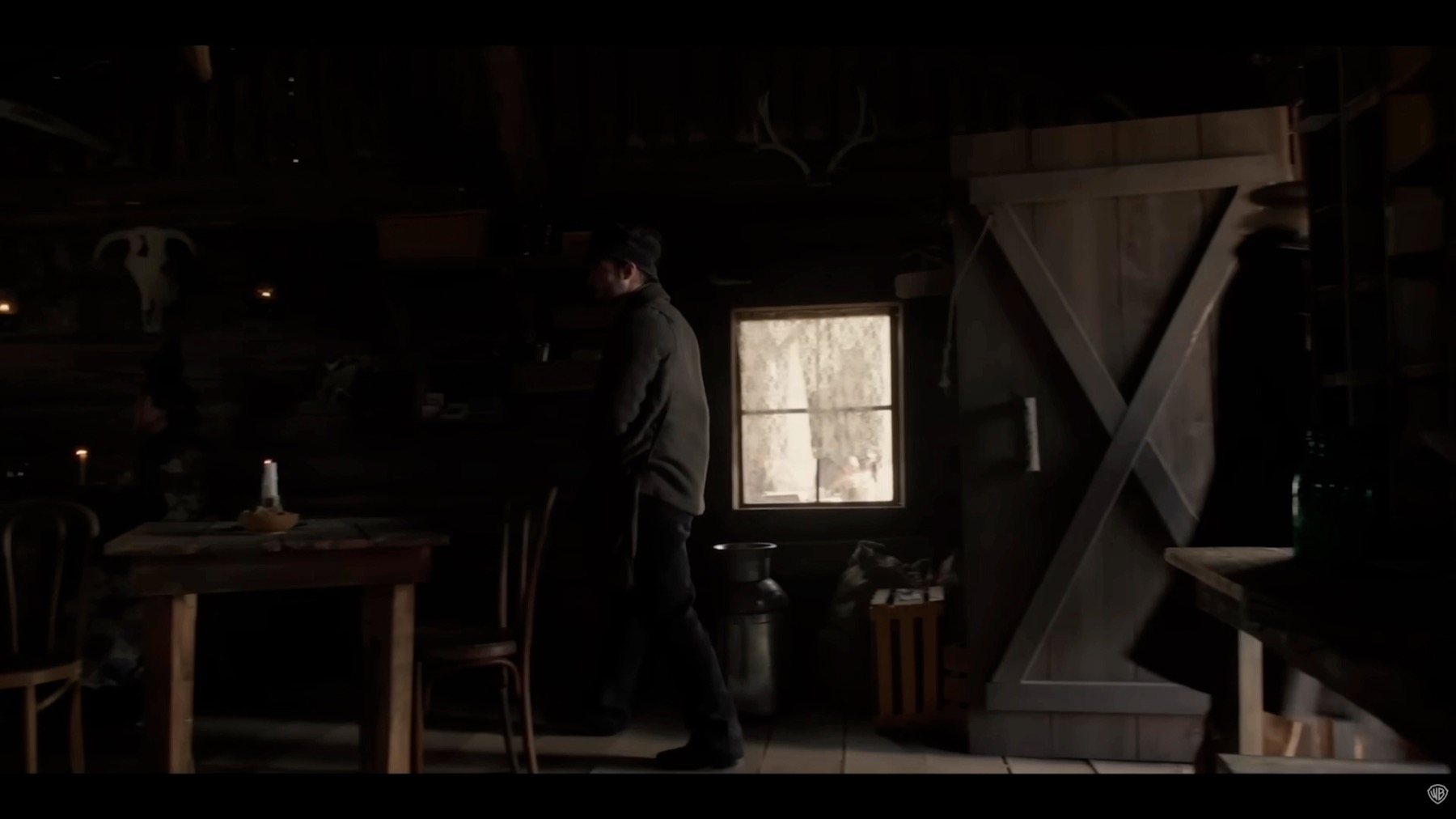
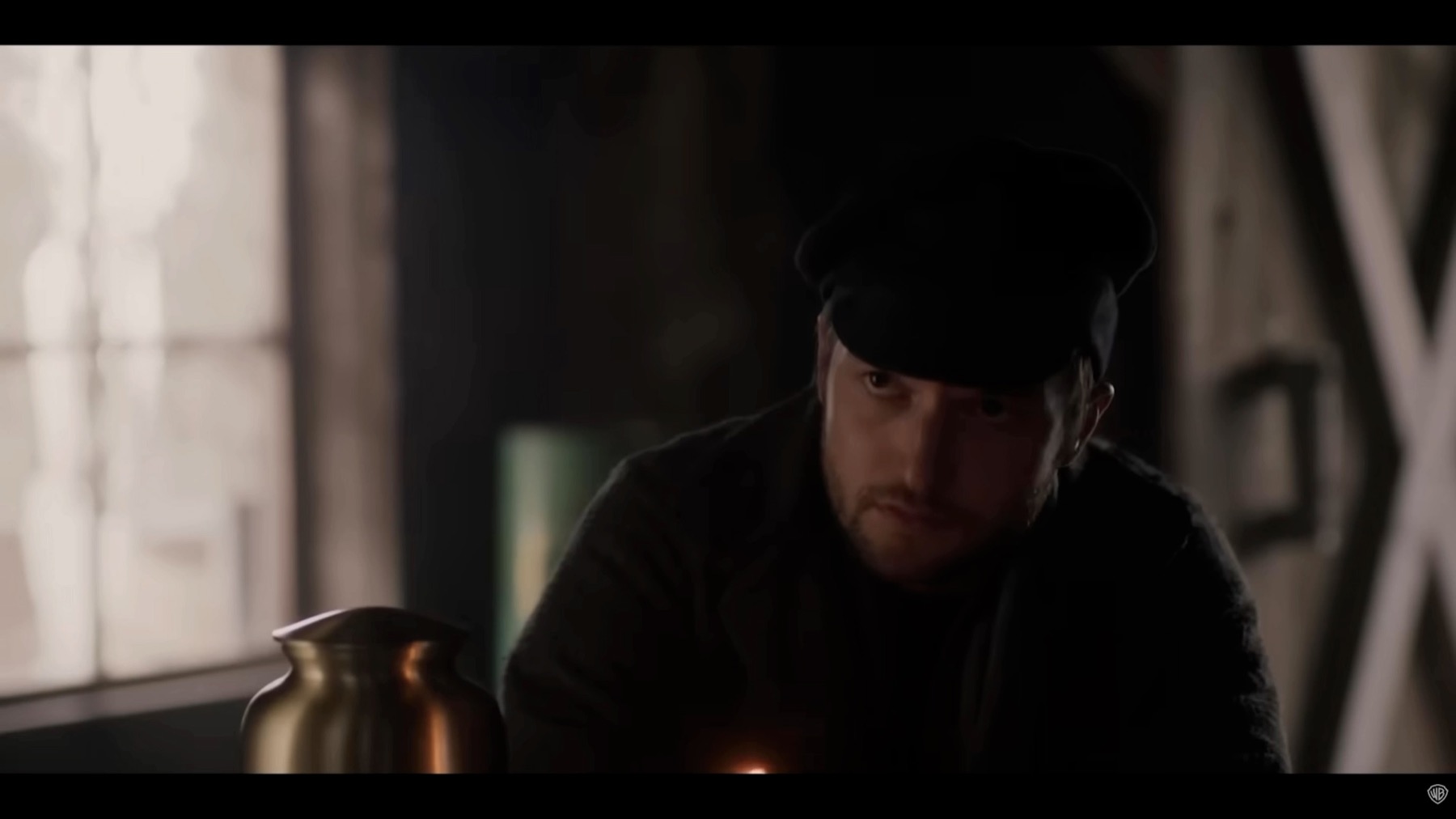
From the finished sequence, the first important angle appears organized around a window, the open door, and an urn that matters to the story. The actors are then placed at the table inside that architecture.
When Samuel L. Jackson’s character joins the scene, a new angle places him between two windows while preserving activity at the bar behind him. The open doorway also makes the direction of his light feel believable.
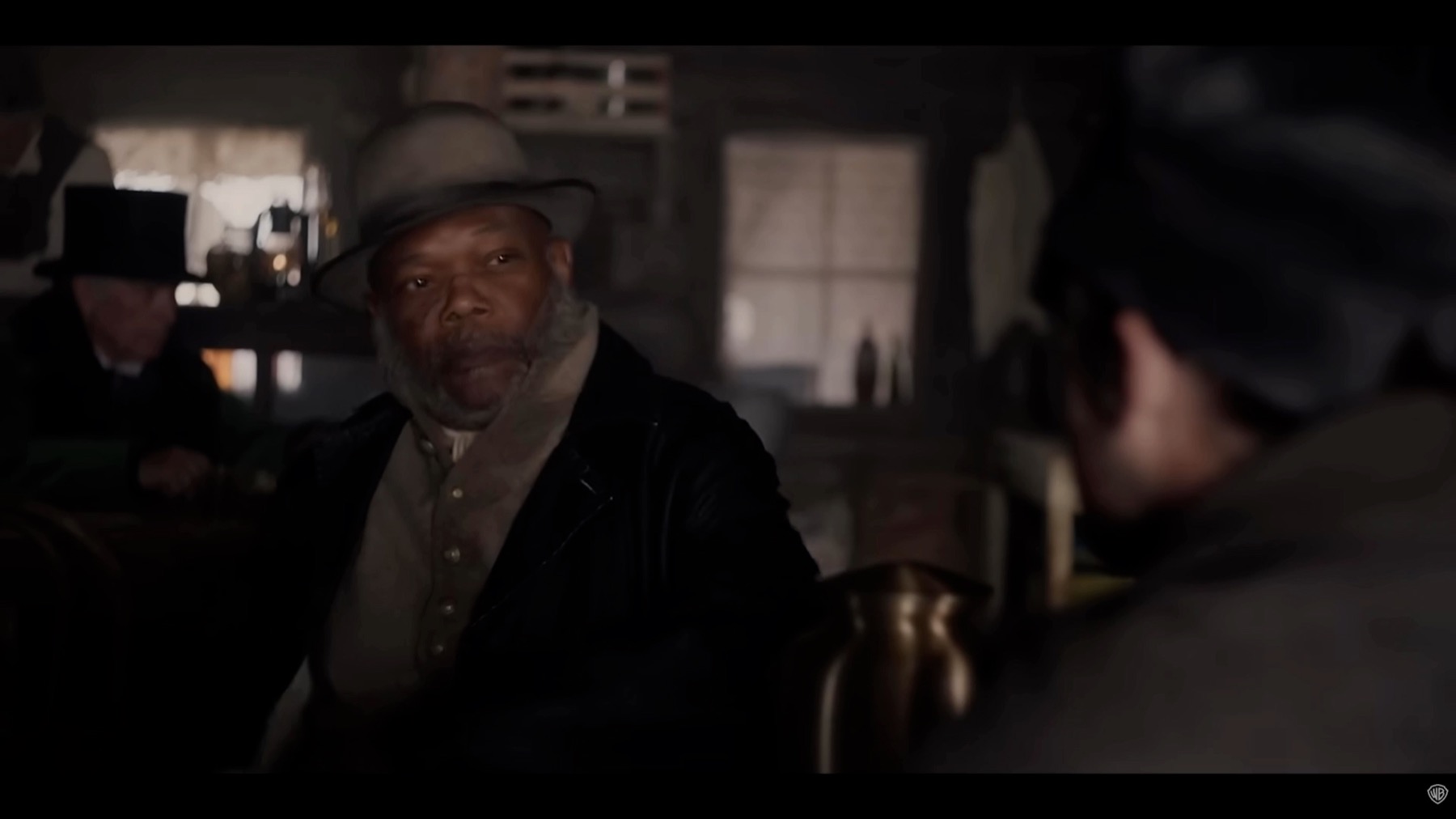
I read this as an example of the set and actor placement serving the chosen frames. That is an observation from the finished scene—not a claim about the filmmakers’ confirmed order of operations—but it gives us a practical way to think through similar problems.
Use the location to communicate before adding coverage
On a production for the Cosmopolitan in Las Vegas, the lobby itself was the valuable visual element. The purpose of the sequence was to show a young couple arriving and entering that environment, so I first chose the frame that best communicated the lobby.
Then I blocked the actors to enter from opposite sides of the camera, meet near the center, hold hands, and continue toward the space. Their action was designed around the architecture rather than forcing the camera to chase them through a less useful angle.
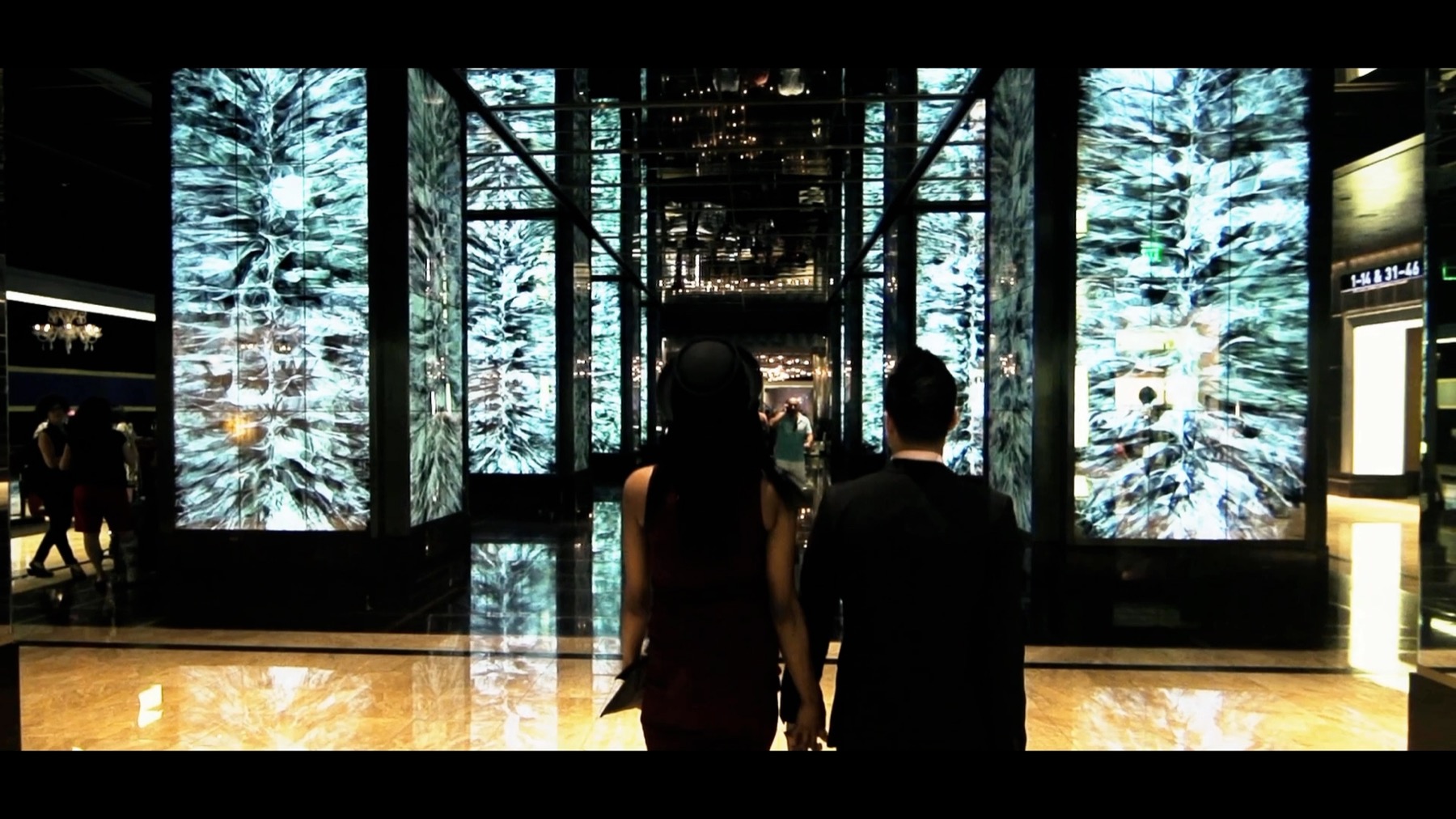
With more control, I could have refined the background action as well—timing people between columns, clearing distractions, and creating additional movement that supported the couple. The important point is that those are composition decisions made after the frame communicates the location.
Do not let a movable object dictate the camera
A recent corporate production made this lesson immediate for me.
The location had a beautiful staircase, a wall of windows, built-in shelving, and several furniture options. Before I had committed to the frame, a chair had already been moved into position. I found myself trying to move the camera around the chair and could not find a composition that felt right.
The solution was simple: remove the chair, step back, and frame the staircase first. Once the camera position was working, we brought the chair and subject back into the image. We also shifted an art piece so it would not disappear behind the subject or create an awkward tangent.
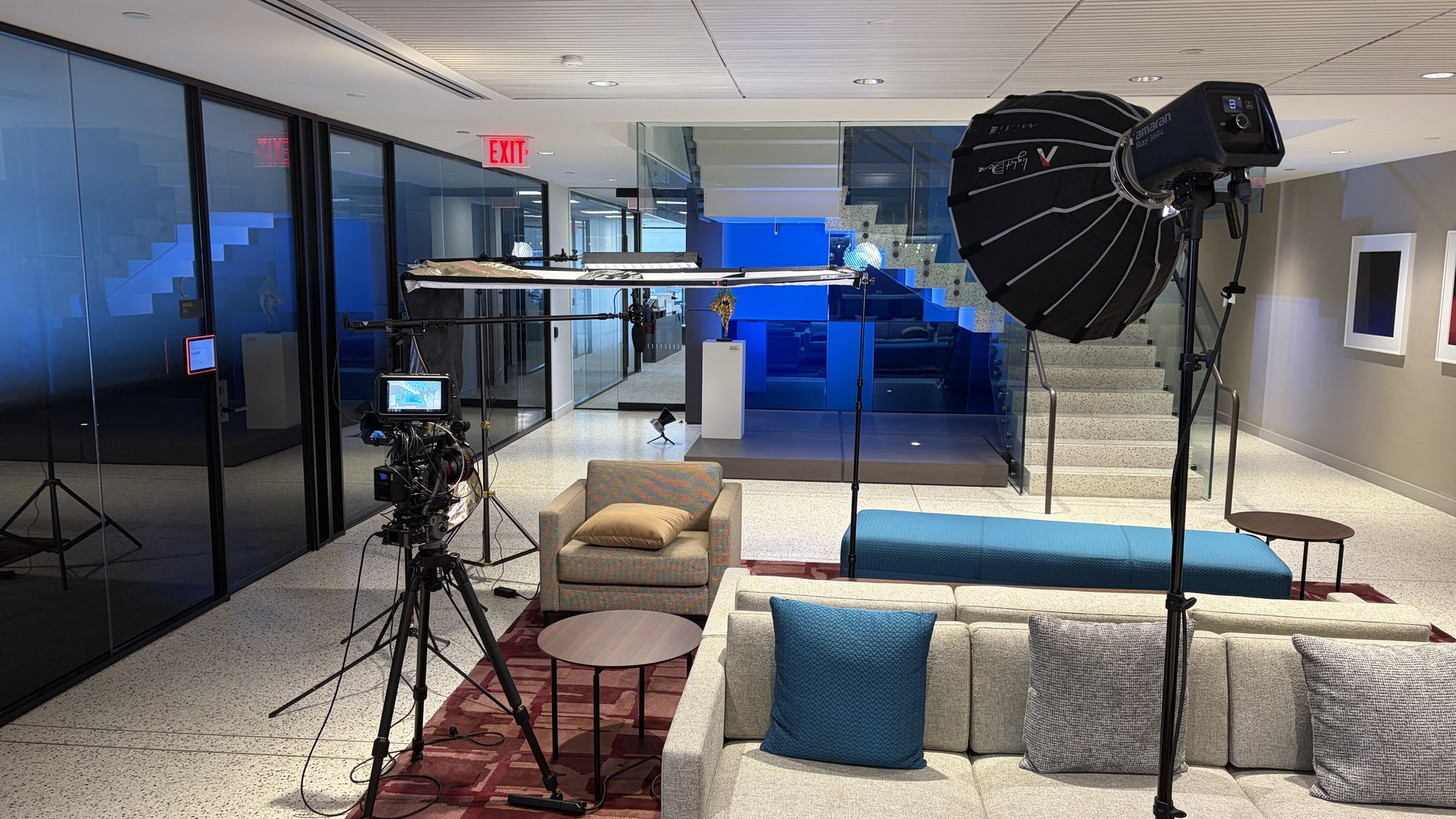
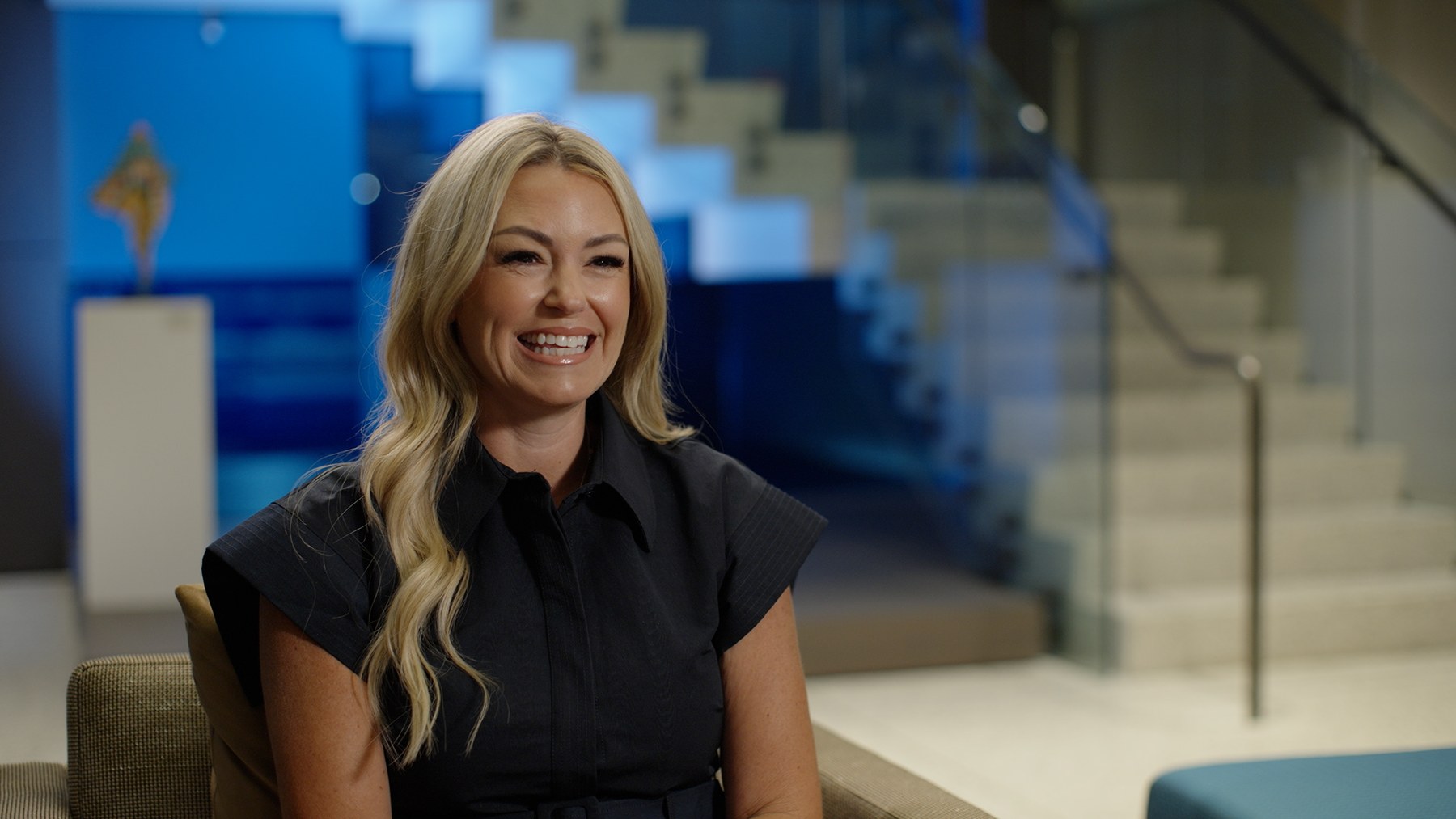
I had been treating the movable object as if it were fixed. Once I separated the uncontrollable from the controllable, the shot came together quickly.
A repeatable location workflow
- Begin with the story. Decide what the audience needs to understand or feel about the location.
- Identify the valuable fixed elements. Look for landscape, architecture, practical light, depth, texture, and environmental details that support that purpose.
- Remove controllable distractions temporarily. Move chairs, props, and people out of the way so they do not influence the camera too early.
- Establish the frame. Choose the camera position, height, lens, and boundaries that best preserve the important location elements.
- Compose the controllable. Place and block the actors, action, props, and lights within the committed frame.
- Check relationships, not isolated objects. Watch for tangents, mergers, blocked architecture, distracting practicals, and elements that compete with the subject.
- Refine the sequence. Apply the same priorities to movement, coverage, reverse angles, and background action so the visual idea survives beyond one polished frame.
Final thoughts
Composition rules can help us diagnose an image, but they do not always tell us where to begin when we arrive at a real location with limited time and imperfect control.
This method gives us a starting point. Find the elements that already serve the story. Protect them with the frame. Then use the parts of production you can control—actors, blocking, props, camera movement, and light—to complete the image.
Frame the uncontrollable. Compose the controllable.
The next time you are struggling to find a shot, ask whether the camera is being forced around something you could simply move. Step back, identify what the location needs to communicate, and establish that frame first.
If you would like to learn more about exposure, camera control, lighting, composition, and creating more intentional images, be sure to check out my online course, Essential Camera Settings.
by Chris Tinard © cNOMADIC 2026
Learn more about cNOMADIC’s cinematography philosophy and training at cNOMADIC.com.