Amaran Halo 100x Review: One Week of Real-World Use
Apr 23, 2026Amaran Halo 100x: quick verdict
The Amaran Halo 100x is the kind of light I usually want in my travel kit: compact, Bowens-mount, bi-color, and capable of running from USB-C power. But after a week of real shoots, the question was not whether the specs looked good. It was whether this 100W-class light could solve enough problems on set to earn the space.
I tested it in small offices, overhead setups, practical-light scenes, and with the modifiers I already carry. The short version: it will not replace a larger key light, but its size, quiet operation, and flexible power make it unusually useful when space and weight matter.
Size, build, and control in real use
The first thing that stands out is the footprint. This light is extremely compact and weighs less than a pound, which immediately changes how easy it is to justify adding it to your kit.
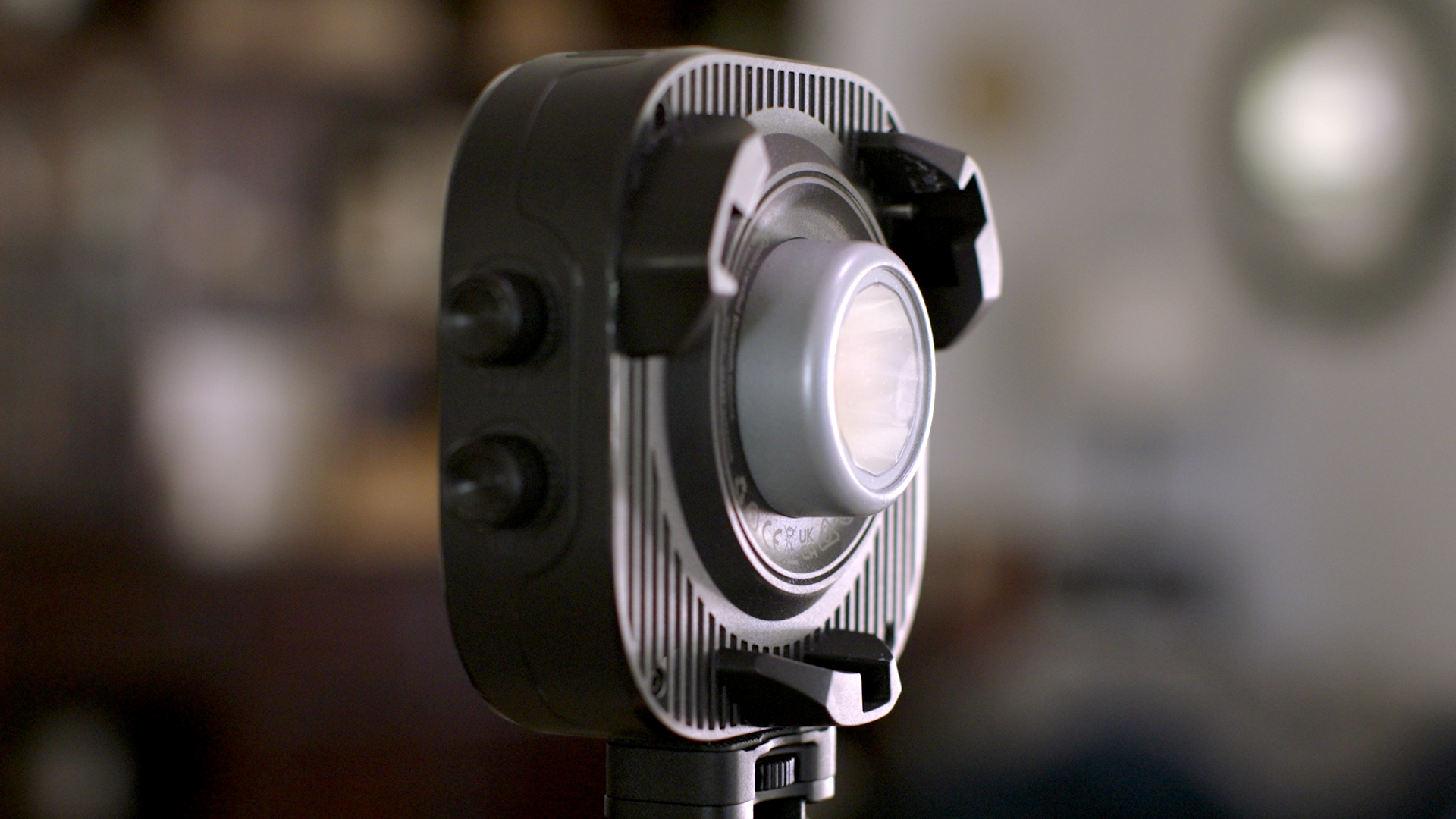
If you want to take a closer look at the Halo 100x, you can find it here:
Amaran Halo 100x on Amazon or visit: https://www.vitopal.net/s/halo100x-cnomadic
It also feels well made. The metal bracket feels solid, not cheap, and includes an umbrella mount for additional diffusion options. From a build standpoint, it feels like a real tool, not just a lightweight compromise.
Key features that matter on set
The Halo 100x is a bi-color light with a color range from 2700K to 6500K, which makes it easy to match warm practicals or cooler ambient environments. It also offers 1% intensity increments, which gives you a lot of control when you are making subtle exposure adjustments.
Like other Amaran lights, it can be controlled through the app, which is a huge convenience when the light is rigged overhead or tucked into a tight corner.
The fan was another pleasant surprise. I left it on SMART mode and honestly never noticed it. For a light this small, quiet operation matters, especially in interview or office environments.
Where the Halo 100x works best
This is not a light I would buy expecting it to replace a larger key light. That is not what it is for.
Where it makes sense is in situations like:
- Small office environments
- Tight corners where larger fixtures do not fit
- Backlights and edge lights
- Overhead setups where weight matters
- Accent lighting in practical scenes
Because it is so light, it becomes much easier to hang overhead, boom out, or place in positions that would feel more annoying with a heavier fixture.
I later used the Halo 100x as a controlled edge light in a difficult real-world interview. You can see the full setup in How to Light Interviews in a Glass Conference Room.
A real lighting setup with the Halo 100x
One of the first setups I used this light for was a simple cozy corner shot of me reading a book with a warm practical lamp in frame. The lamp already established the mood, but I wanted a little more warmth and level on my face without ruining the natural feel of the scene.
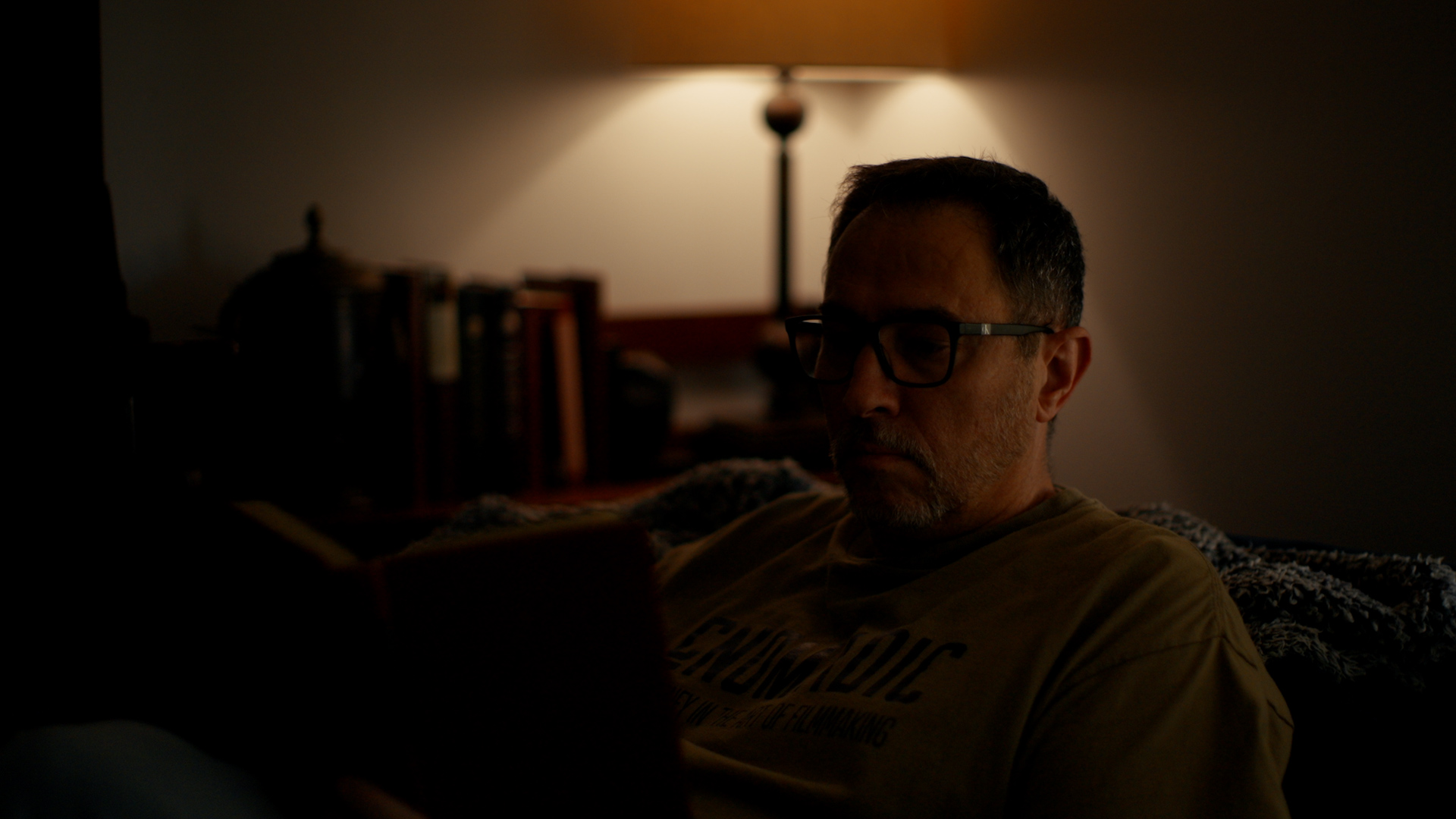
without the Halo 100x
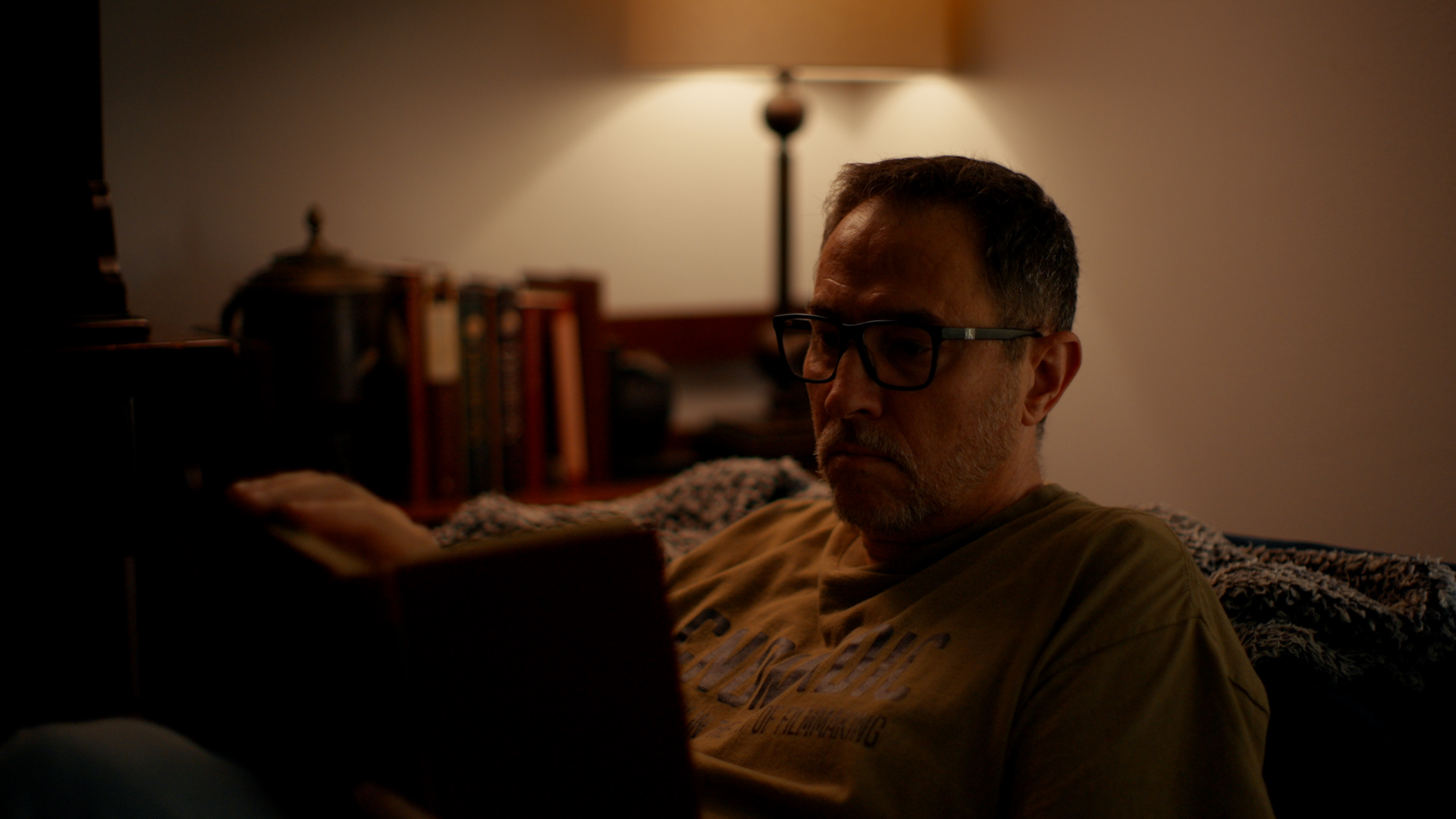
with the Halo 100x
By hanging the Halo 100x overhead and matching the warmth of the practical, I was able to gently lift my face and complement the lamp rather than fight against it. That is where a light like this starts to make sense. It is not about overpowering the scene. It is about enhancing what is already working.
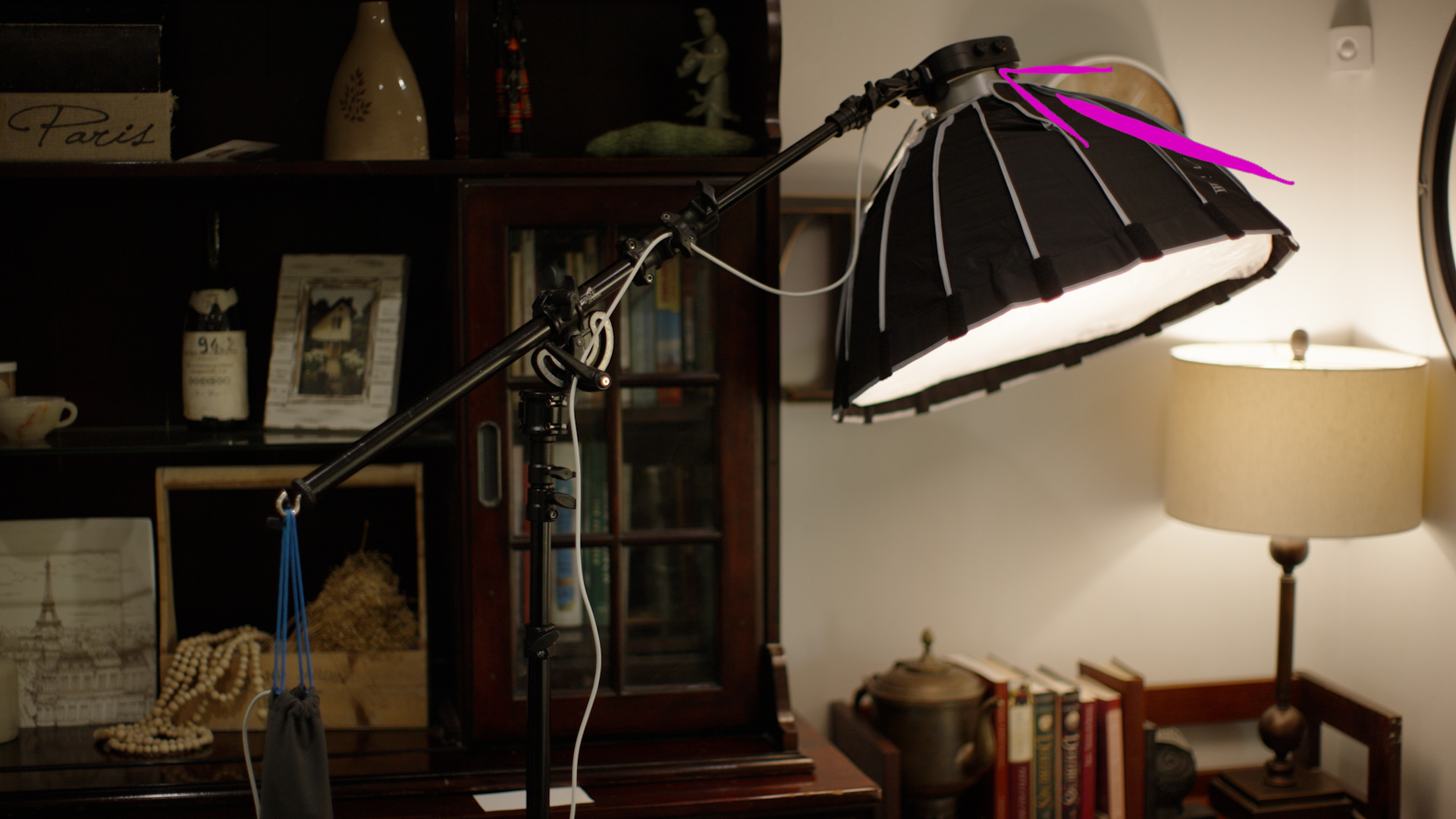
Using Bowens modifiers with the Halo 100x
One of the biggest advantages of this light is the Bowens mount. That matters because it means the Halo 100x can work with modifiers I already own.
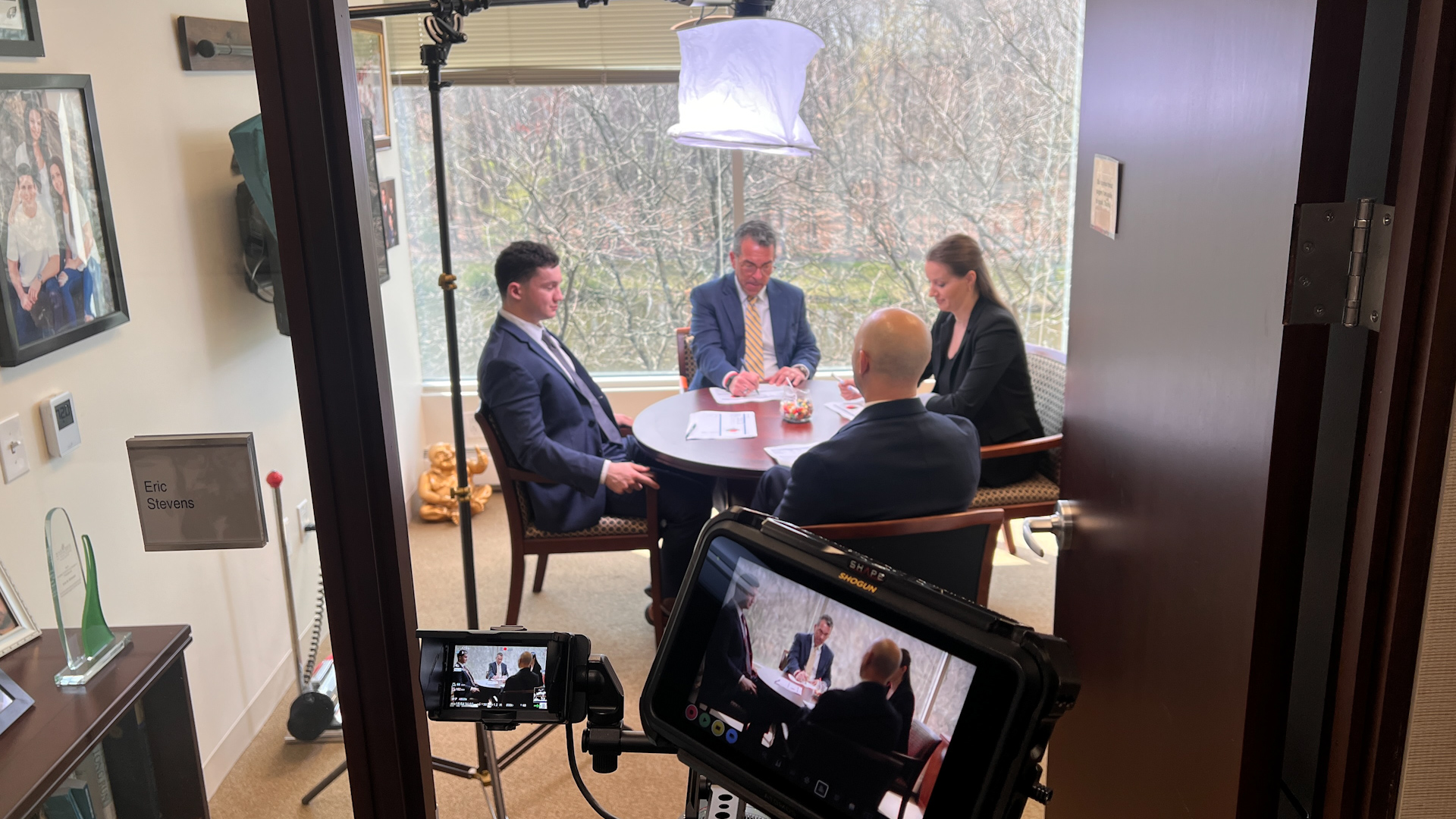
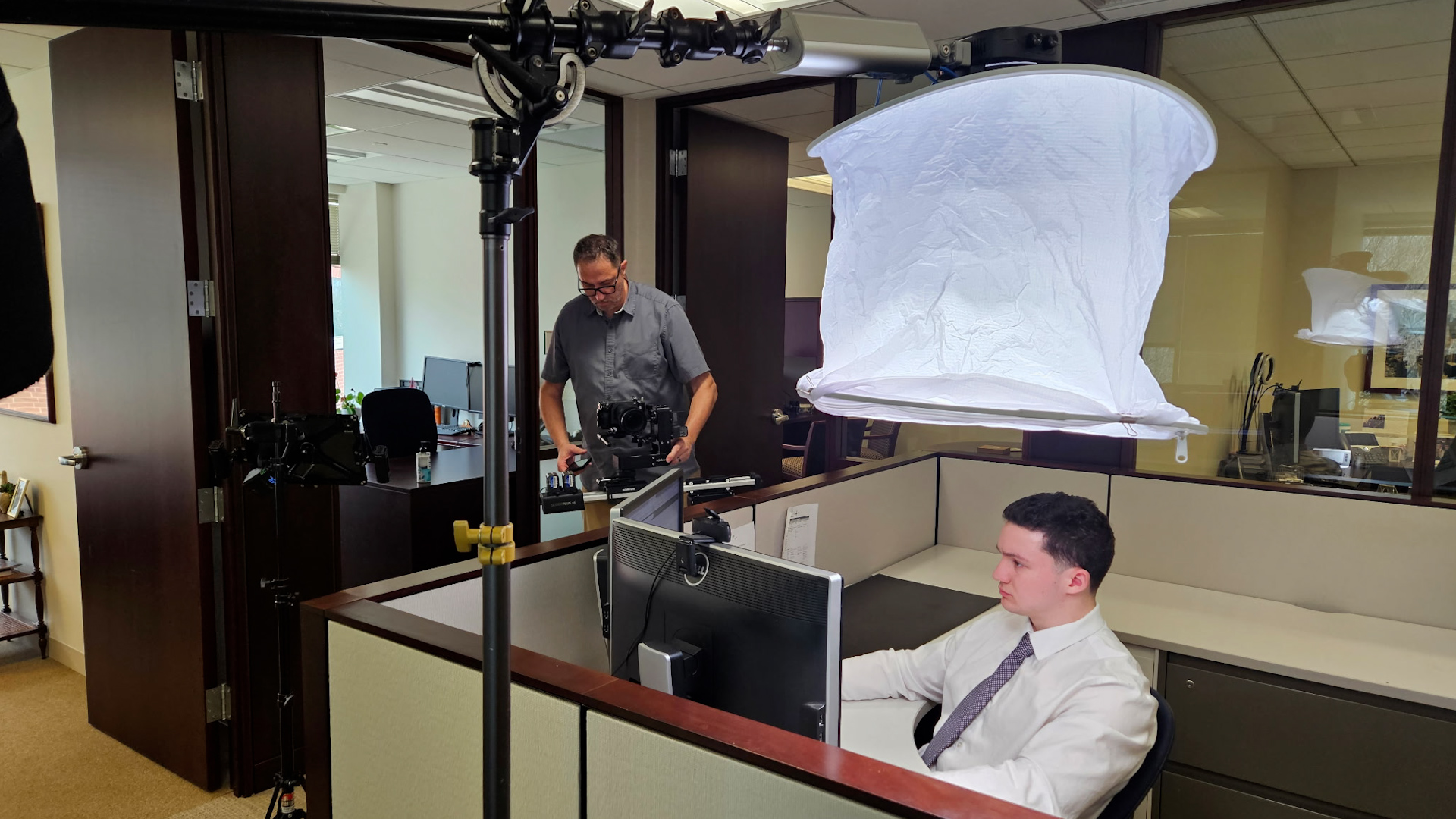
I paired it with an Aputure Space Light Softbox, and that combination became especially useful for filming people around a small office table. Used almost like a lantern, it created a soft 360-degree feel while also giving me overhead light onto the table. The result felt soft, natural, and practical for real-world corporate work.
Battery power and travel workflow
For me, the biggest jump in usefulness came from adding the Amaran Peak Battery. Once I did that, this light became much more flexible.
Now I could use it in crowded office spaces without worrying about power cables on the floor. That makes setup faster and safer, especially when people are moving through the space. At full intensity, I was getting about an hour of runtime, which is enough for many quick lighting setups.
That battery addition really turned this from a small light into a much more complete mobile solution.
Accessories and limitations
Like many lights, this is not really a complete workhorse straight out of the box. You need to factor in accessories.
- It does not come with a modifier
- It does not come with a protective cover
- The Peak Battery makes it far more useful in the field
If you already own Bowens mount modifiers, that is a big win. If not, that is an extra cost to consider.
The missing protective cover is the biggest miss for me. For a light that clearly lends itself to travel, leaving the monolight exposed feels like an odd decision. I ended up buying an aftermarket cover, but most available options add unnecessary bulk. A shallow protective cover would make much more sense for a light like this.
Power-supply and battery tradeoffs
I was initially surprised that the power supply is external rather than integrated into the head. But the more I used the light, the more I understood the tradeoff.
If the power supply were built into the fixture, the unit would likely be heavier and bulkier. Keeping it external helps maintain the lightweight design, which is exactly what makes this light so useful overhead.
The same thing happened with the battery connection. Unlike the Pano series, the Peak Battery does not power the Halo directly through the mount. You need to use a USB-C cable.
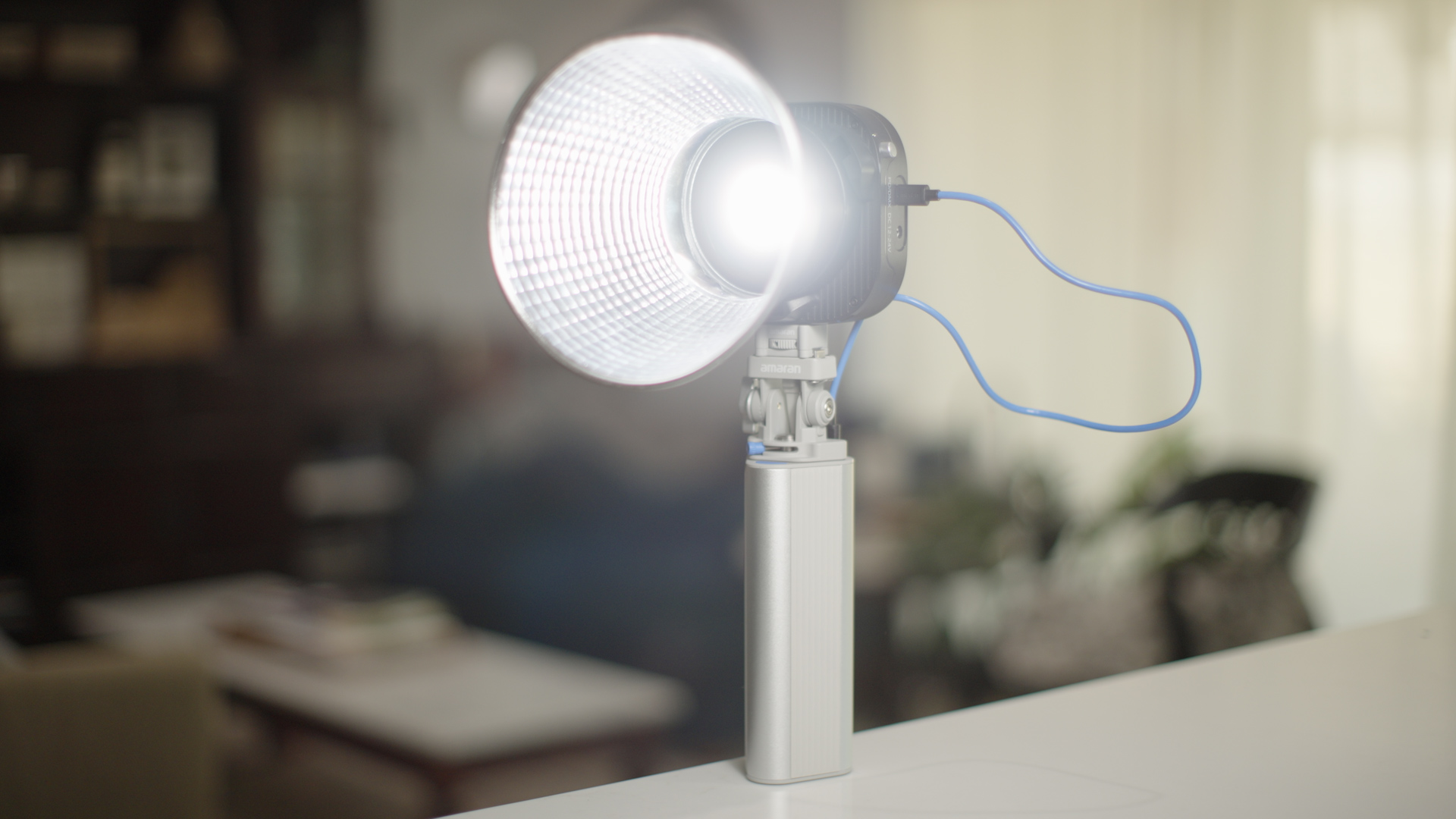
At first, that felt like a downside. In practice, it became a useful workaround. By using a longer USB-C cable, I was able to keep the battery lower on the stand, sometimes even using it as a counterweight, while keeping only the light itself extended overhead. That reduced weight at the end of the arm and made the setup easier to manage.
Limitations to consider
There are a few clear limitations to keep in mind.
- Its 84W maximum output is not meant to replace a larger key light
- It is strictly bi-color, no RGB
- No modifier is included
- No protective cover is included
- Battery power requires a USB-C cable rather than a direct mount
None of those are dealbreakers if you understand the role of the light. But they are part of the overall value equation.
Halo 100x vs. Ray 60c and Pano 120c
In terms of footprint, the Halo 100x is very similar to the Amaran Ray 60c, but it offers more power while also costing less. That already makes it an interesting option in this size range.
Compared to the Pano 120c, the Pano is definitely more powerful, but it loses points for me because it does not use a Bowens mount. The Halo is also more affordable, and for my workflow, the ability to use my existing modifiers makes it much more attractive.
If your priority is more output, RGB control, and a larger diffused source, my Amaran Ray 360c review shows where that larger light begins to earn its extra size and weight.
Final verdict: who should buy the Halo 100x?
For me, this ended up being one of those tools I did not expect to use that often, but now it keeps finding its way into more and more setups.
It is not replacing my bigger lights, and it is not trying to. What it does well is add flexibility without adding much weight. That alone gives it real value.
If you already have Bowens modifiers and you want a light that can work in small spaces, overhead setups, accent roles, and practical environments, the Halo 100x makes a lot of sense.
So yes, for what it is, this light does earn a place in my kit.
Gear only becomes useful when you can place exposure intentionally. My Essential Camera Settings course teaches the camera and exposure decisions behind these setups.
by Chris Tinard ©️ cNOMADIC 2026
To learn more about cNOMADIC's online cinematography course, visit cNOMADIC.com