
How to Use a Location’s Strengths to Create Better Images
Jun 01, 2026How to Use a Location's Strengths to Create Better Images
Great cinematography happens when the strengths of a location align with the needs of the story.
One of the most important skills in cinematography is learning how to identify and use the unique characteristics of a location. But that does not mean using every interesting element a space has to offer.
The location gives you possibilities. The story tells you which possibilities matter.
That distinction is important because a beautiful location does not automatically create a strong image. A strong image happens when the visual qualities of a space support the feeling, message, and narrative you are trying to communicate.
In this breakdown, I am looking at a corporate interview I filmed inside a Chicago high-rise. At first glance, the obvious strength of the location was the view. We had large windows, beautiful light, and city views surrounding the space. But after studying the room, it became clear that the skyline was not the strongest storytelling choice.

The story needed to communicate confidence, professionalism, expertise, stability, and trust. For that message, the architecture of the room became more useful than the view outside the windows.
The story decides which strengths matter
A common mistake is assuming that every visually interesting feature in a location should be used simply because it exists. If a room has a skyline, we feel like we need to show the skyline. If a space has a dramatic architectural feature, we feel like we need to build the frame around it.
But cinematography is not about showing everything that looks good. It is about choosing what supports the story.
In this case, the financial advisory firm needed to feel confident, organized, sophisticated, and trustworthy. That made certain characteristics of the room more valuable than others. The symmetry supported order. The depth supported sophistication. The scale of the room created authority. The clean architectural lines reinforced professionalism.
If the story had been about isolation, uncertainty, or vulnerability, I may have used the exact same location very differently. The room would not have changed, but the visual approach would have.
That is why the story has to guide the decision-making process. The room can suggest options, but the story chooses which options are worth using.
Great locations leave clues
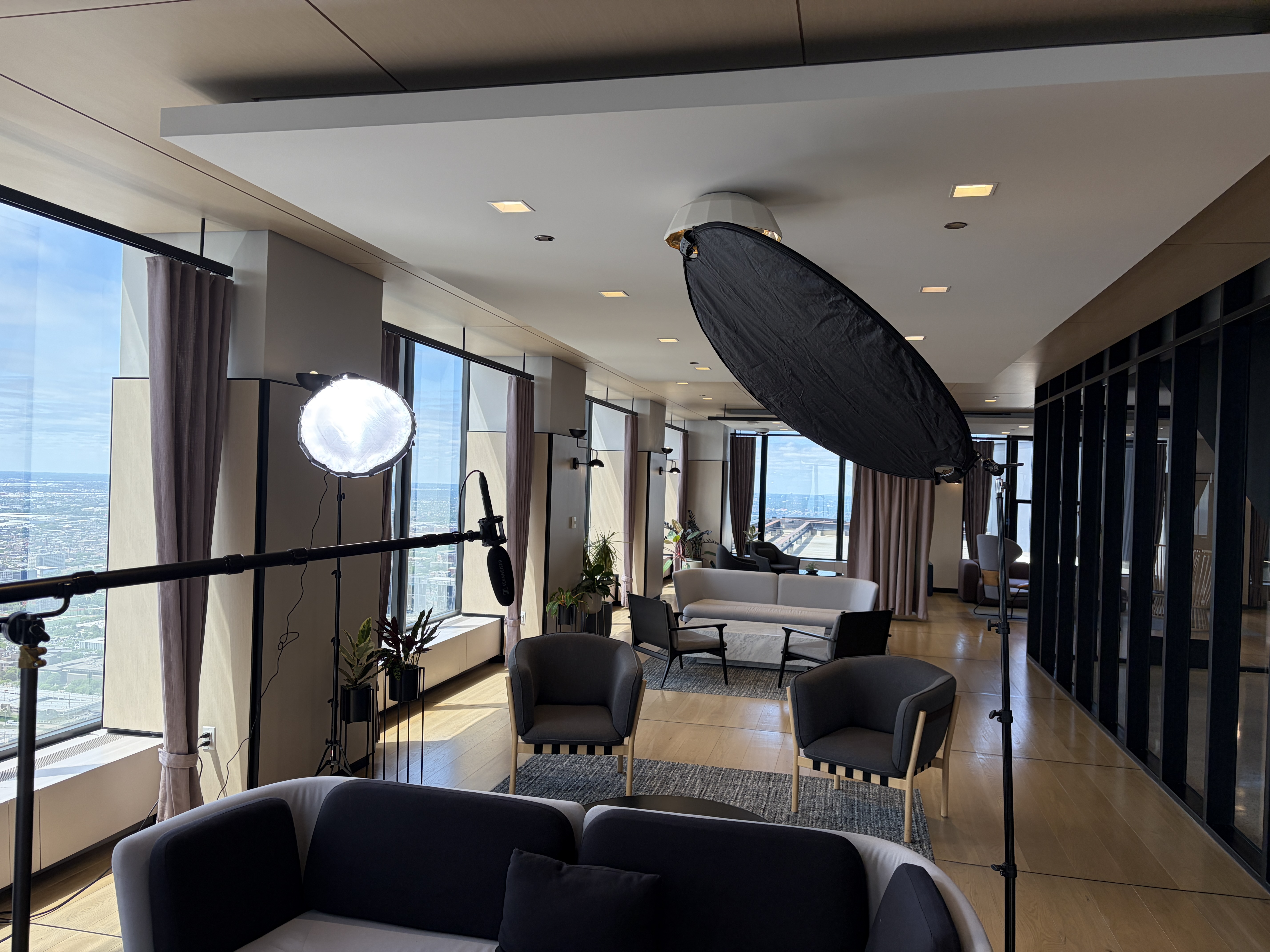
Before setting up lights, choosing a focal length, or locking in a composition, I like to spend time simply observing the space. I am looking for patterns, leading lines, visual weight, natural light direction, architectural structure, and anything that naturally draws my eye.
In this room, the clues were everywhere. The repeating columns created rhythm. The furniture naturally established symmetry. The windows and walls generated strong leading lines, while the length of the room created a strong sense of depth.
None of those characteristics automatically dictated the final image, but they pointed toward a strong possibility. The room was suggesting symmetry, depth, and scale. Because those qualities aligned with the message of the piece, I decided to build the composition around them.
Why center framing worked
Once I recognized the symmetry and depth of the room, center framing became the strongest solution.
The subject is placed directly in the center of the frame and looks straight into the lens. That choice was not made simply because the room was symmetrical. It was made because the symmetry supported the message.

For a financial advisory firm, centered composition helps create a feeling of stability, confidence, order, and control. The subject feels grounded within the environment. The frame feels organized. The direct eye contact makes the communication feel personal and authoritative.
If I had pushed the subject off to one side, the image would have lost much of that balance. The composition would have felt less connected to the architecture of the room and less aligned with the story we were trying to tell.
Exposure is a storytelling decision
One of the more intentional choices in this frame was allowing the background window to clip.
Normally, cinematographers are taught to protect highlights whenever possible. In many situations, that is the right instinct. But exposure is not just a technical decision. It is also a storytelling decision.
The view outside the back window did not support the story. It showed distracting rooftop details that pulled attention away from the subject and the environment that actually mattered. So instead of fighting to preserve that information, I allowed the window to overexpose.
That decision simplified the frame. It removed distraction and helped keep the audience focused on the subject, the symmetry, and the architecture of the room.
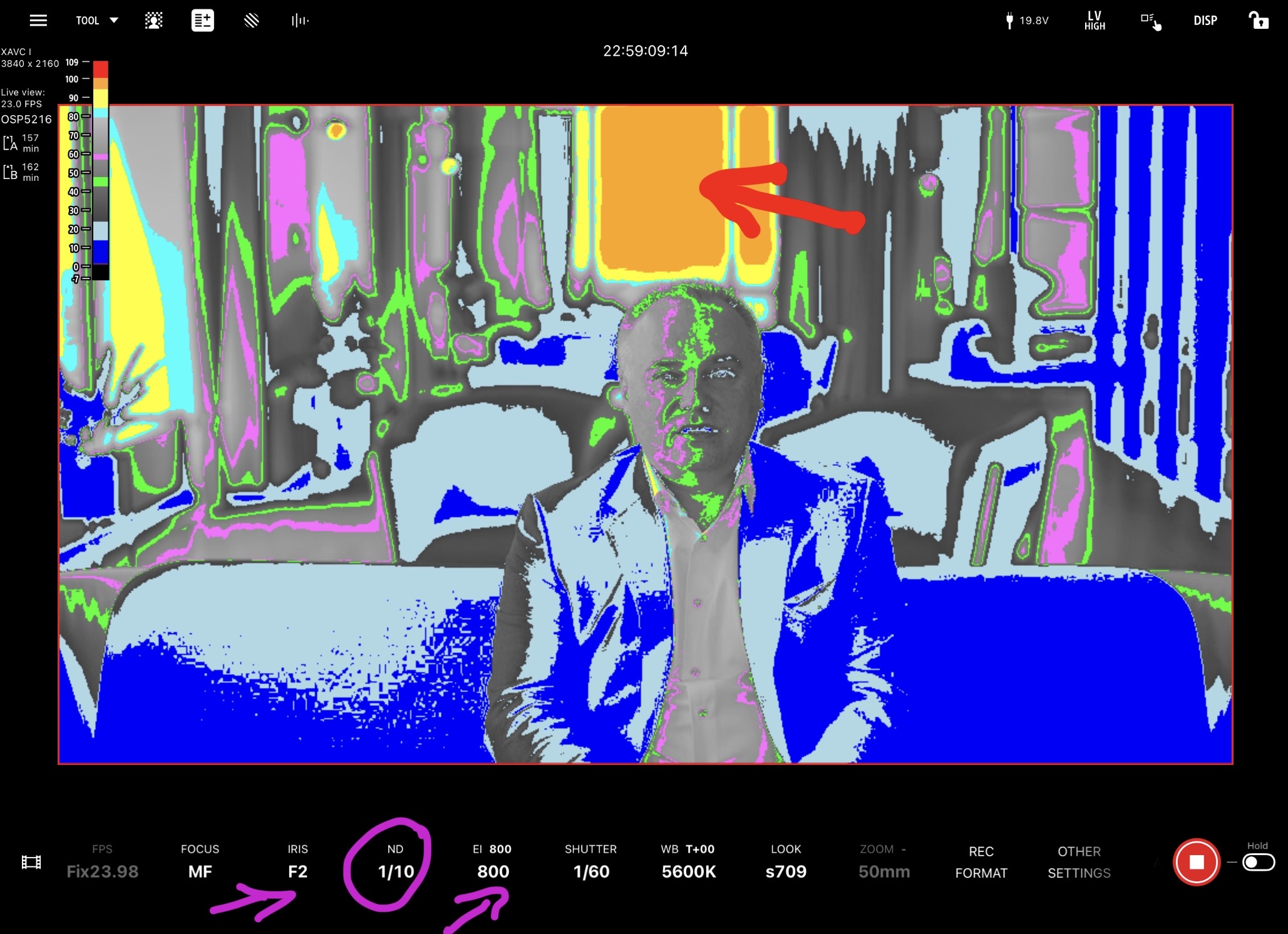
Sometimes the question is not, "Can I preserve this detail?" The better question is, "Does this detail help the image?"
Lighting should support the location
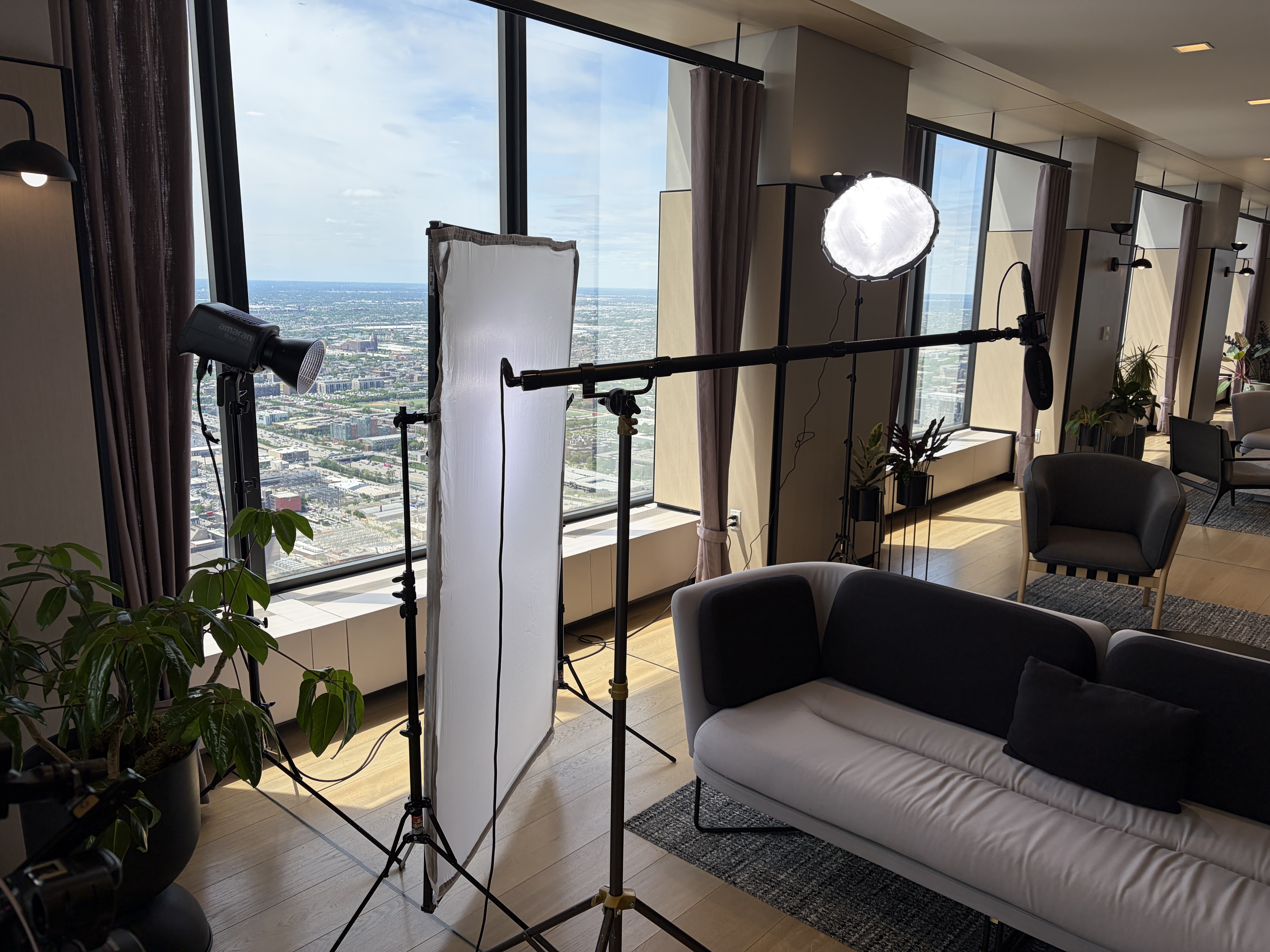
Natural-looking lighting does not always mean using less lighting. Often, it means using lighting in a way that feels motivated by the environment.
In this setup, the windows already established the direction of light, so the key light came from the window side. The backlight was placed to echo the direction of the natural light entering the room. The negative fill was used to control unwanted spill from the ceiling practicals and clean up the light on the subject.
The goal was not to overpower the location or create a lighting style that called attention to itself. The goal was to refine what the room was already suggesting.
When lighting overpowers a location, the room becomes a backdrop. When lighting supports the location, the environment becomes part of the storytelling.
Negative space only works when it supports the story
This frame contains a lot of negative space, but that space was not used simply because negative space looks cinematic.
It worked because it supported the message.
The large environment surrounding the subject creates scale. It gives the image a feeling of sophistication and control. It visually suggests that the subject is comfortable operating within a larger and more complex environment.
For a financial advisory firm, that matters.
But if the story had required intimacy, vulnerability, or tension, I may have used the space differently. I might have moved the camera closer, placed the subject off-center, or reduced the amount of environment in the frame.
The point is not that negative space is always the right choice. The point is that negative space becomes powerful when it supports the emotional and narrative goal of the image.
The location gives you options, the story gives you direction
A location can offer many strengths: beautiful light, depth, architecture, symmetry, texture, color, scale, or interesting views. But not every strength should be used.
As cinematographers, we have to filter those possibilities through the needs of the story. What should the audience feel? What should the image communicate? What does the environment say about the subject? Which visual characteristics support those goals?
Those questions matter more than whether a location is beautiful.
A stunning location can still produce weak images if its strengths are not aligned with the story. At the same time, a very ordinary location can create powerful images when its strengths are identified and used intentionally.
Final thoughts
Great cinematography happens when the strengths of a location align with the needs of the story.
The room can influence your decisions, but the story should guide them. The location provides possibilities. The story determines which possibilities matter.
In this frame, the symmetry, depth, architecture, lighting direction, and negative space all worked together because they supported the message we wanted to communicate: confidence, expertise, professionalism, and trust.
Those choices were not made simply because they looked good. They were made because they helped tell the story.
And ultimately, that is what cinematography is about. Not just creating beautiful images, but creating meaningful images.
If you'd like to learn more about exposure, camera control, lighting, composition, and creating more intentional images, be sure to check out my online course, Essential Camera Settings.
by Chris Tinard © cNOMADIC 2026
Learn more about cNOMADIC's cinematography philosophy and training at cNOMADIC.com