

The Room Was Already Well Lit. That Was the Problem
Sep 07, 2026A dark room gives you an obvious problem to solve: you need more light.
A bright room can be harder.
When a location already has plenty of illumination, it is easy to assume that lighting becomes less important. In practice, the opposite can be true. The camera may have all the exposure it needs while the image still lacks depth, direction, and visual hierarchy.
That distinction is important because cinematography is not simply about getting enough light onto the sensor. It is about deciding where brightness should exist in the frame, where it should not, and how those differences guide the viewer's attention.
Exposure tells you how bright something is. Lighting tells you why.
It is possible to expose every element in a scene perfectly and still end up with an uninteresting image.
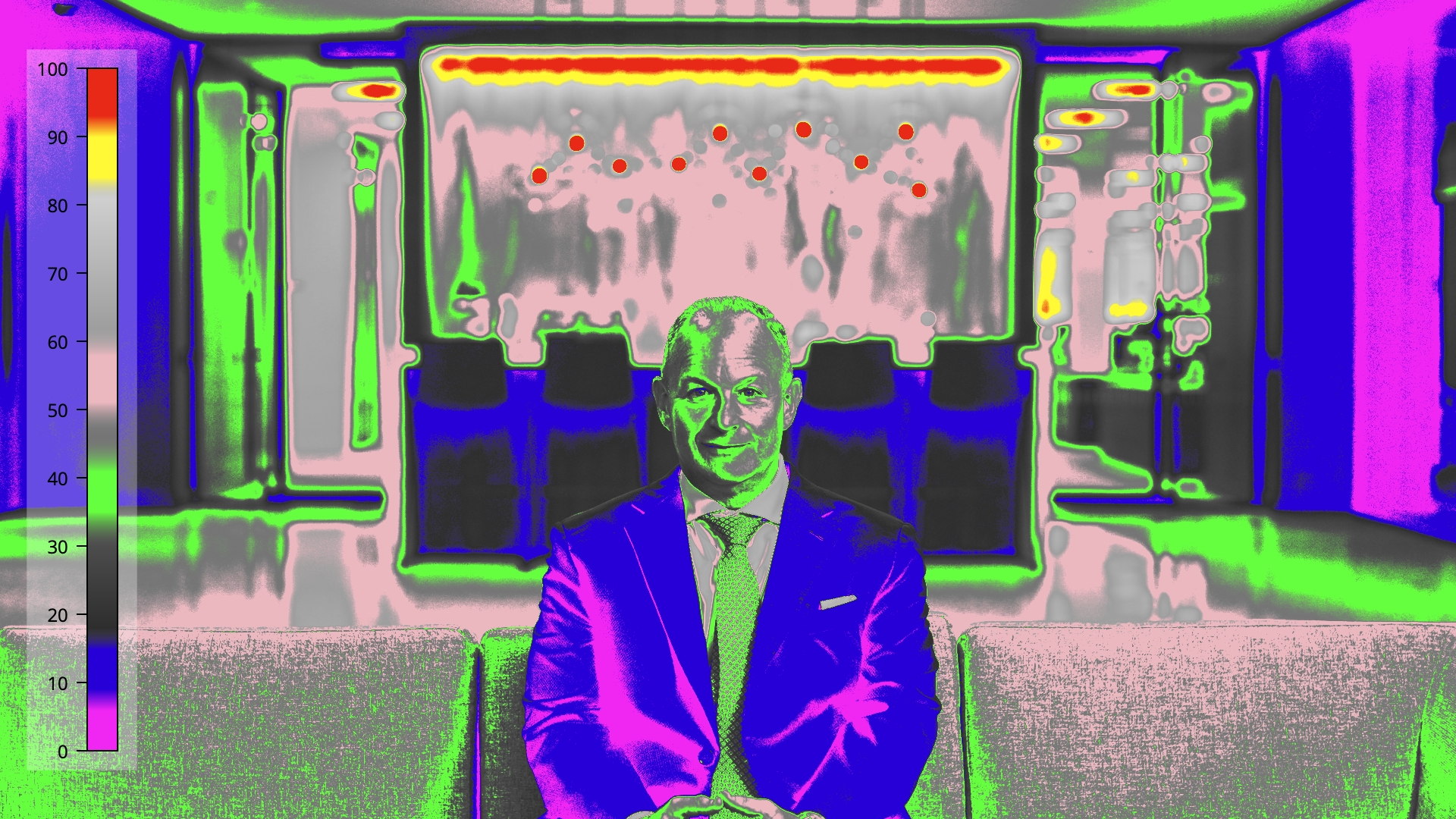
If the subject, walls, furniture, floor, and background all fall within a narrow brightness range, the image can feel visually flat even though nothing is technically wrong. There is no strong hierarchy telling the viewer where to look first.
This is why checking exposure should be only one part of evaluating a location.
After determining whether the subject is at an appropriate level, look at the relationships throughout the frame:
- Is the subject brighter or darker than the area immediately behind them?
- Is one side of the face meaningfully different from the other?
- Do highlights and shadows create direction?
- Is the background competing with the subject?
- Is there enough tonal variation to create depth?
Those questions describe the structure of the image rather than simply its exposure.
Think in relationships, not fixtures
One of the easiest traps in lighting is thinking immediately about equipment.
Do I need a stronger key? A backlight? Another softbox?
A better starting point is to identify which relationship in the image needs to change.
Maybe the face needs to separate more clearly from the background. Maybe the fill side needs to become darker. Maybe the background needs more variation. Maybe the subject is already bright enough and the real problem is that everything else is equally bright.
Once you identify the relationship, the solution might involve adding light—but it might just as easily involve removing it.
This is why flags, solids, negative fill, grids, cutters, and other light-control tools can be just as important as the fixtures themselves. Lighting control is as much about preventing light from reaching something as it is about illuminating it.
Negative fill is often described simply as a way to create contrast on a face. That is true, but its more important function is control.
More lights do not necessarily mean more control
There is a natural temptation on set to use the equipment that was brought with you. If a backlight is available, it feels as though it should be used. If another fixture can fit into the setup, it can seem like adding it will make the image more cinematic.
But every additional source introduces another decision: its direction, intensity, color, spill, shadows, reflections, and interaction with every other source in the room.
Sometimes removing a light makes the image stronger because the lighting becomes easier to read.
A useful test is to turn a fixture off after you have positioned it. If the image does not become meaningfully worse, that fixture probably does not need to be there.
Build visual hierarchy across the entire frame
Subject separation is often discussed as though it simply means making the person brighter than the background. That is only one option.
Separation can come from brightness, contrast, color, focus, texture, composition, or combinations of all of them.
A dark-haired subject against a bright wall may separate naturally without a backlight. A bright shirt against a dark background may already create enough tonal contrast. A shallow depth of field can separate a subject even when the exposure values are similar.
This is why lighting decisions should be made while looking at the complete frame rather than judging the face in isolation.

Develop a lighting strategy before building a lighting setup
The most useful habit you can develop is separating the idea of a lighting strategy from a lighting setup.
A setup describes the equipment: one key, negative fill, a backlight, a bounce, and so on.
A strategy describes what you are trying to accomplish: create direction on the face, reduce ambient fill, separate the subject from the background, preserve the architecture, or maintain a natural relationship with the existing light.
That distinction makes you much more adaptable on location.
If you arrive thinking, “I need a key, fill, and backlight,” you are trying to force a predetermined setup onto the room.
If you arrive thinking, “I need to create shape on the face while preserving this bright environment,” you can use whatever combination of existing light, subtraction, fixtures, framing, and camera placement best solves that particular problem.
That is ultimately what lighting is: not placing fixtures according to a formula, but controlling the relationships within the frame.
If you want a practical framework for making these decisions on real productions—from framing and lighting to lens choice and exposure—explore The Essential Guide to Cinematic Video.
by Chris Tinard © cNOMADIC 2026
Learn more about cNOMADIC's cinematography philosophy and training at cNOMADIC.com.