Why I Finally Added a 35mm to My Kit
Jun 15, 2026Why I Finally Added a 35mm to My Kit
I thought I needed a wider lens for small rooms. What I actually found was a different way to create close-ups—with context.
For years, I shot almost everything on a 50mm cinema lens.
I love the way a 50mm isolates a subject. It gives me beautiful compression, a shallow depth of field, and a natural sense of intimacy. When I want the audience to pay attention to a face, a reaction, or a small detail, it is still one of my favorite focal lengths.
But the 50mm kept creating the same practical problem.
I would arrive at a small office, a tight conference room, or a location where I needed to photograph several people, and I simply could not get wide enough. I could back the camera into a wall, compromise the composition, or change lenses.
For a long time, I treated a 35mm as a problem-solving lens—a focal length I would use only when the room forced me to.
Then I started testing one properly, and I realized I had been asking the wrong question.
The question was not whether a 35mm could fit more into the frame. Of course it could. The real question was whether it could preserve the intimacy and emotional connection I loved about a 50mm while giving the environment a meaningful role in the image.
A 35mm is more than a wider 50mm
The obvious advantage of a 35mm is its wider field of view. In a small room, that extra width can be the difference between getting the shot and fighting the location.
But the more interesting advantage appears when I move the camera closer.
Instead of standing farther away and using the 35mm simply to make a wide shot, I can move physically closer to the subject, maintain a strong close-up, and still reveal more of the world around them.
That creates what I think of as a close-up with context.
The subject still carries the emotional weight of the image, but the office, audience, furniture, or activity around them tells us where they are and how they relate to the space.
The lens I tested
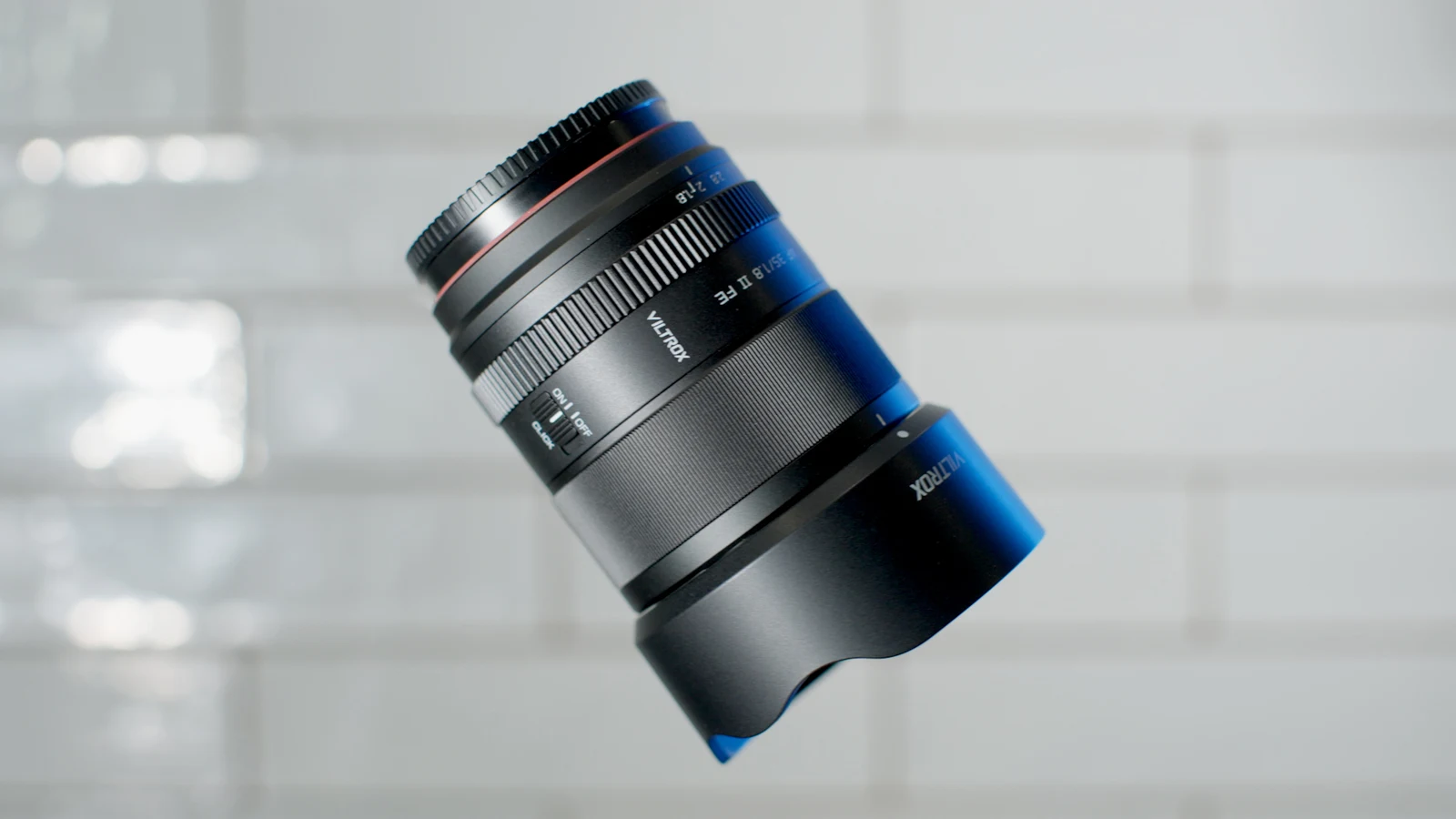
The lens that changed my mind was the Viltrox 35mm f/1.8.
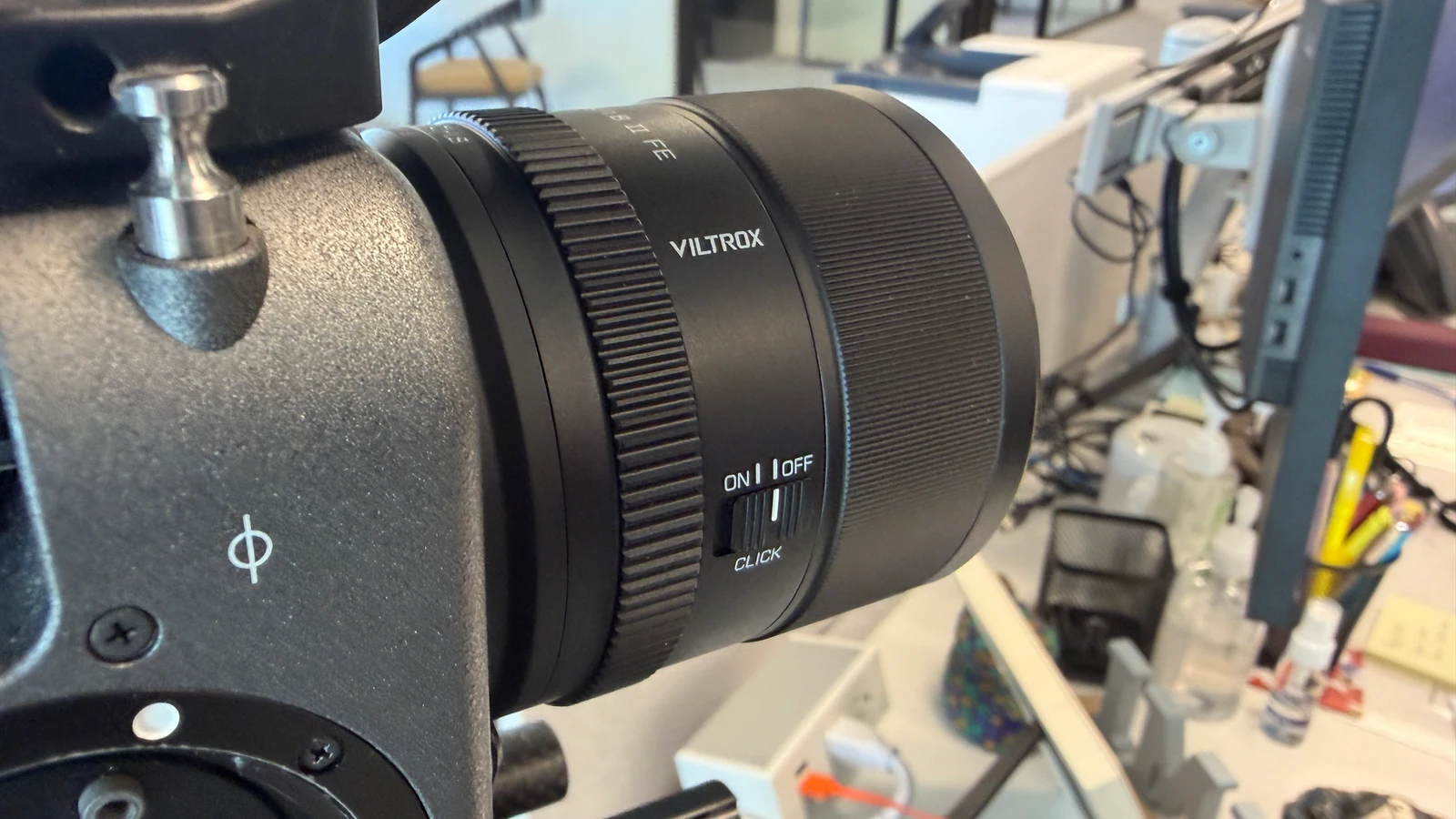
It is a full-frame lens that costs less than $400, weighs less than a pound, and is small enough to live in my camera bag. On my Sony cameras, the native mount means I do not need an adapter, and its size makes it easy to balance on a tripod or gimbal.
It also opens to f/1.8, which is important. One of my concerns about moving wider was losing the shallow depth of field I use to guide attention. The fast aperture lets me retain separation when the shot and working distance allow it.
Isolation versus description
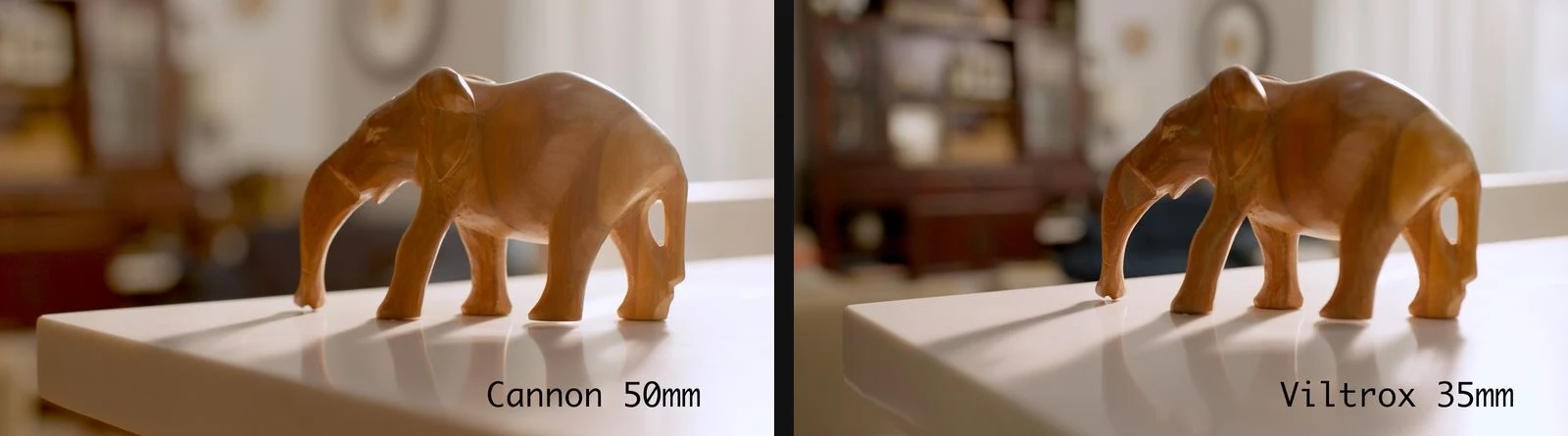
To understand the visual difference, I photographed the same small wooden elephant with a 50mm and the Viltrox 35mm.
With the 50mm, the elephant feels more isolated. The background falls away, the field of view is tighter, and our attention stays almost entirely on the object.
For the 35mm frame, I moved the camera closer so the elephant remained a similar size. The subject still dominates the composition, but the wider field of view reveals more of the cabinet and the surrounding room.
The 50mm image is more isolated. The 35mm image is more descriptive.
Neither is automatically better. They communicate different things.
Why context matters in corporate filmmaking
In corporate work, context is often part of the story.
A presenter is not simply a face. They may be speaking to an audience, collaborating with a team, or working inside a space that communicates something important about the organization.
A 35mm lets me establish those relationships without always retreating to a distant wide shot.
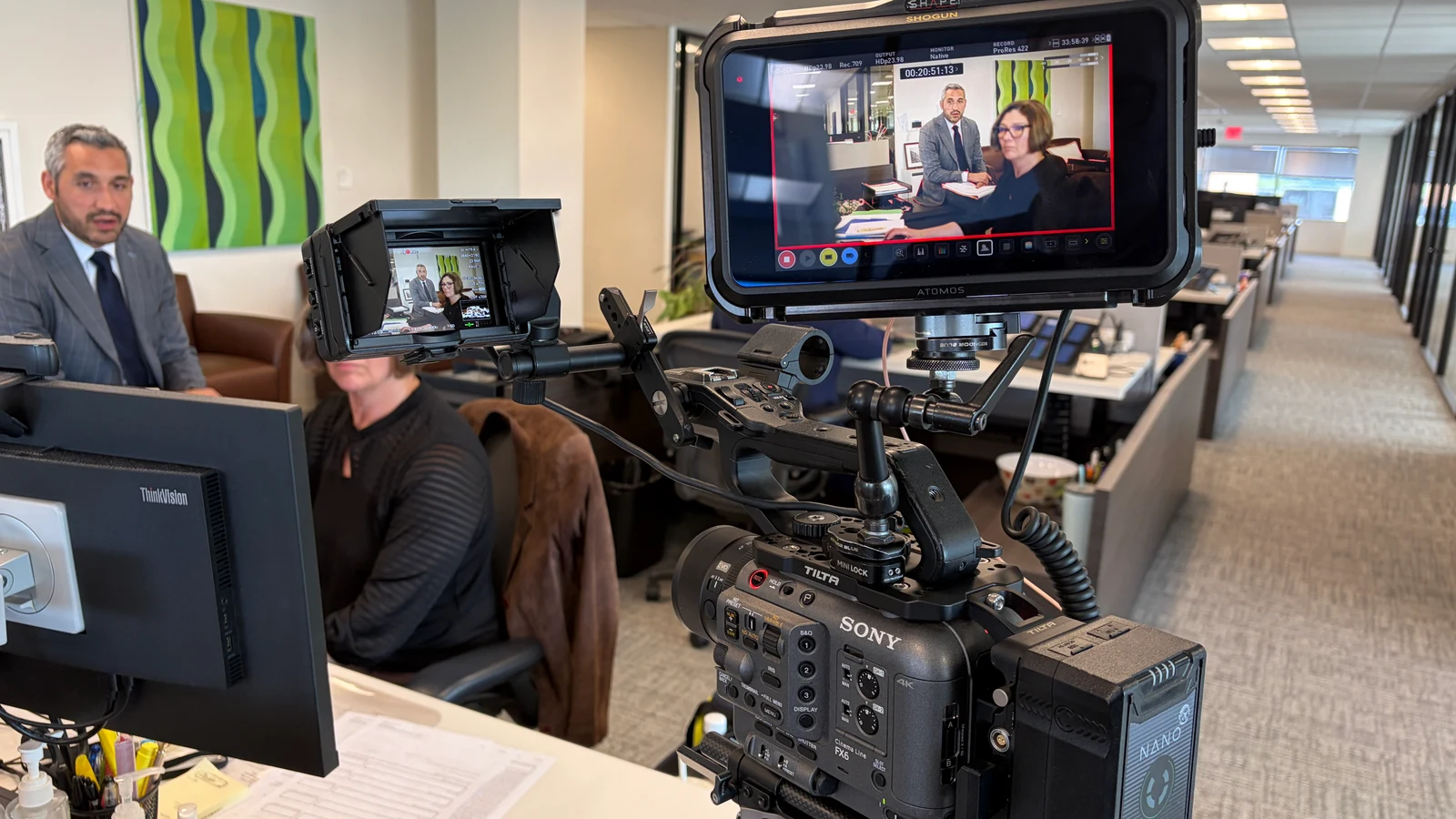
I can stay close to a presenter and still include the audience behind them. I can photograph someone working at a desk while preserving the whiteboard, furniture, and colleagues that describe the environment. The subject remains the focus, but the frame carries more information.

Stay close instead of backing away
One of the most useful changes is physical.
With a 50mm in a larger room, I may be tempted to back away to include more of the scene. That distance can make the camera feel like an observer standing outside the action.
With a 35mm, I can remain closer and let foreground and background elements build depth around the subject. The perspective feels more immediate because the camera occupies the same space as the people in the frame.
That is especially valuable in documentary-style corporate films, where I want the viewer to feel present rather than merely informed.

Image quality versus price
The Viltrox is not replacing my cinema lenses. That is not the point.
I compared it with a lens costing close to $5,000, and the price difference is obvious when you consider the mechanics, focus control, build, and consistency expected from cinema glass.
But the image-quality difference was much smaller than the price difference might suggest.
The Viltrox was sharp wide open, the colors were accurate, and the footage was easy to match with my Canon cinema lenses after grading. I noticed a slight green tendency, but it was close to the character I was already getting from the Canon glass.
Once the footage is edited and graded inside a finished film, I do not expect a client to identify which shot came from the inexpensive 35mm and which came from the cinema lens.
That is the kind of value I care about: a compact tool that solves a real production problem without creating a new post-production problem.
A note about autofocus
The lens supports autofocus, but compatibility depends on the camera and its current firmware. At the time I filmed the review, autofocus was not available with my FX3 and FX6 setup.
That was not a major limitation for me because I generally focus manually for this kind of work. If autofocus matters to your workflow, check the current lens, camera, and firmware compatibility before buying.
Use 35mm and 50mm as complementary tools
The most important lesson from this test is that a 35mm does not need to compete with a 50mm.
The two focal lengths solve different storytelling problems:
- Use the 35mm to establish environment and relationships. It can show where the subject is, who is around them, and how the space contributes to the story.
- Use the 50mm to isolate moments. It is ideal for reactions, expressions, details, and images where the environment should recede.
Used together, they create a more complete visual language. The 35mm gives the audience context; the 50mm lets them concentrate on emotion and detail.

What earned the 35mm a permanent place in my kit
I originally wanted a 35mm because I needed an answer for tight locations.
It earned a permanent place in my kit because it does much more than fit the room.
It gives me another way to control what the audience knows. I can keep a subject emotionally present while revealing the people, space, and relationships that give the moment meaning.
The Viltrox is small, fast, sharp, and inexpensive enough that bringing it does not require a complicated decision. It can simply stay in the bag until the story needs it.
Final thoughts
A wider focal length does not have to mean a flatter, less intimate image.
The key is how you use it.
Move closer. Decide which parts of the environment matter. Use aperture, distance, composition, and foreground to keep the subject visually important.
When those choices are intentional, a 35mm can create something a 50mm cannot: a close-up that tells us not only who to look at, but also where they are and why that place matters.
If you would like to learn more about exposure, camera control, lighting, composition, and creating more intentional images, be sure to check out my online course, Essential Camera Settings.
by Chris Tinard © cNOMADIC 2026
Learn more about cNOMADIC’s cinematography philosophy and training at cNOMADIC.com.